









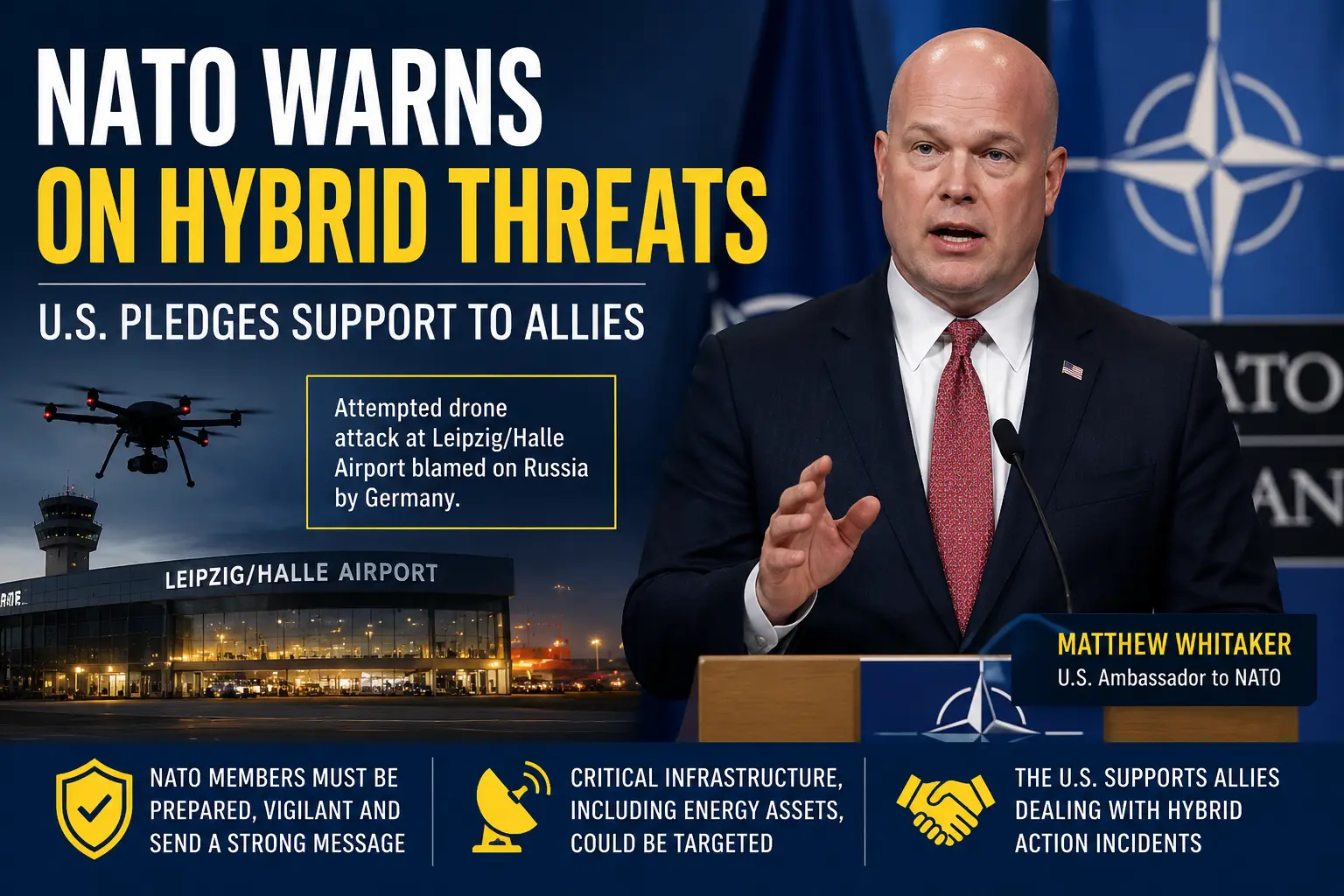
NATO members should not tolerate deliberate hybrid actions against their countries, U.S. Ambassador to NATO Matthew Whitaker said on Saturday, warning that critical infrastructure could also face such threats.
Speaking on the sidelines of a business conference in Cernobbio, Italy, Whitaker said the United States would support NATO countries as they respond to incidents involving suspected hybrid warfare.
He pointed to last month’s attempted drone attack at Germany’s Leipzig/Halle Airport as a particularly concerning case. Germany has blamed Russia for the incident.
U.S. envoy highlights Leipzig drone incident
Whitaker distinguished the Leipzig/Halle incident from cases involving Russian drones that have entered NATO airspace while targeting Ukraine and were believed to have strayed off course.
He described incidents such as Leipzig and previous events in Poland as more concerning because they could represent deliberate hybrid actions against NATO members.
“Then you have what I would call the more concerning hybrid actions,” Whitaker said.
He said NATO members need to remain prepared and vigilant when confronted by such incidents.
NATO urged to send a strong message
Whitaker said countries should respond firmly when the actor behind an incident can be identified.
Germany’s attribution of the Leipzig incident to Russia, he said, provides an example of when NATO members should make clear that such actions are unacceptable.
The U.S. ambassador said the alliance should not tolerate deliberate hybrid actions against its members.
Critical infrastructure also a concern
Whitaker warned that critical infrastructure could become a target of future hybrid activity.
He specifically mentioned energy assets and said national authorities should monitor vulnerable infrastructure closely.
The response to individual incidents would primarily remain the responsibility of the affected country, Whitaker said, while the United States would support allies dealing with such threats.
What are hybrid actions?
Hybrid warfare can involve a combination of tactics designed to pressure or destabilize a country without relying solely on conventional military attacks.
Such activity can include drone incidents, cyber operations, sabotage, disinformation and other forms of interference.
Whitaker’s comments come as NATO countries remain alert to incidents linked to Russia’s war against Ukraine and the possibility that related activity could affect alliance members.
For NATO governments, the challenge is to distinguish accidental incidents from deliberate actions while maintaining readiness to protect national and alliance security.
Whitaker’s warning underscored the U.S. position that deliberate hybrid actions against NATO members should receive a clear and coordinated response.


