







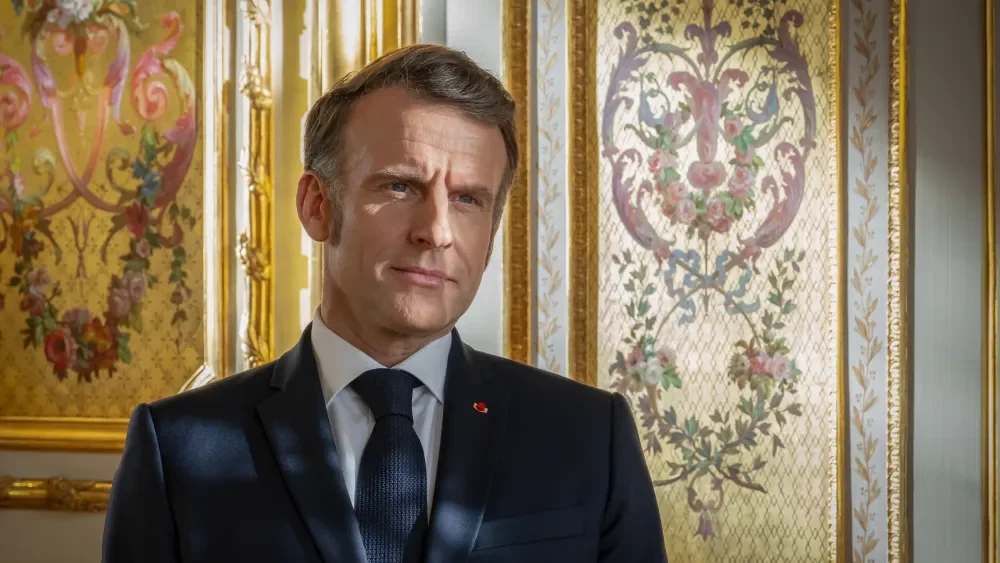
French President Emmanuel Macron is calling for a new form of international cooperation to address the rapid changes reshaping cinema, television, animation and video games.
In an opinion piece published ahead of the Lumière Summit, Macron argued that the creative industries are facing several major disruptions at once — from artificial intelligence and social media to changing audience habits, financing pressures and the concentration of distribution platforms.
His central argument is that no single government, company or industry can deal with those changes alone.
Instead, he wants governments, filmmakers, studios, producers, broadcasters, platforms, cinemas and cultural institutions to work together on what he describes as a “new multilateralism” for the moving image.
Macron: The World Has Become a ‘Civilization of Images’
Macron began his argument with the origins of cinema.
He pointed to the Lumière brothers and the first public film screening in Paris in 1895 as the beginning of a new era in visual culture.
More than 130 years later, moving images are no longer confined to movie theaters.
Films, television programs, animation and video games are now consumed across televisions, computers, smartphones and other connected devices.
Macron argues that screens have become central to modern life.
But he says the technology itself is not the enemy.
Screens have also allowed people to discover films, ideas and cultures from around the world on an unprecedented scale.
The challenge, he argues, is deciding how society uses that technology.
The Problem Is Bigger Than Screen Time
Macron acknowledged growing concerns about the way people interact with screens.
Parents worry about children’s attention. Teachers face competition from a constant stream of digital content. Artists are competing for audiences in an increasingly crowded environment.
Governments are also struggling to regulate technologies that can develop faster than legislation.
Macron’s argument is that simply rejecting screens would miss the larger opportunity.
Instead, society needs to change its relationship with them.
He sees cinema, television series and video games as particularly important because they can demand sustained attention, encourage imagination and create shared experiences.
Macron Draws a Line Between Content and Creative Works
One of the central ideas in Macron’s argument is the difference between an endless supply of digital content and works that require significant investment, talent and creative risk.
The distinction matters because the number of images available to audiences is growing rapidly.
But more images do not necessarily mean more meaningful or original works.
Macron warned that if the screen industries lose the ability to finance ambitious projects, support new voices and maintain institutions that connect creative works with audiences, the result could eventually be more images but fewer genuinely different things to see.
That concern extends beyond economics.
For Macron, films, television programs and games also have cultural value because they preserve memories, represent experiences and allow audiences from different societies to encounter one another’s perspectives.
He Also Sees a Democratic Risk
Macron’s argument goes beyond the future of entertainment.
He links the creative industries to the way democratic societies communicate.
Algorithms increasingly decide which images and stories people encounter based on what is expected to hold their attention.
Macron argues that this creates a risk.
A society where people are repeatedly shown material selected for them by engagement-driven systems may have fewer opportunities to encounter unfamiliar ideas, experiences and perspectives.
That could contribute to public conversations becoming shorter, more fragmented and more confrontational.
For Macron, protecting creative works is therefore not simply an industry issue.
It is also a cultural and democratic question.
AI Is Part of a Much Bigger Transformation
Artificial intelligence is one of several forces Macron says are changing the creative economy.
He also pointed to:
- Fragmentation of audience attention
- Growing power of major distribution channels
- Changes in creative financing
- New production and distribution models
- The rapid development of generative AI
- Changing audience behavior
Individually, these developments could be treated as another disruption for the industry to adapt to.
Together, Macron argues, they are changing the basic conditions under which creative works are created, financed, distributed and discovered.
The response, he says, cannot simply wait until the new system becomes permanent.
Macron Wants Governments and Industry at the Same Table
His proposed solution is international cooperation.
Macron says governments cannot make films on their own. Artists do not control the technology through which billions of people consume media. Companies cannot determine the public interest by themselves.
And national institutions cannot independently solve problems involving technologies, capital, creative works and audiences that cross borders.
His proposed framework would bring together:
- Governments
- Filmmakers and other creators
- Studios
- Producers
- Broadcasters
- Streaming platforms
- Cinemas
- Cultural institutions
The goal would not be to recreate the old entertainment business model.
Instead, Macron wants international cooperation focused on creating conditions for ambitious creative work, helping those works reach audiences and ensuring technological development remains compatible with human creativity.
Lumière Summit Brings France and South Korea Together
That argument will be at the center of the Lumière Summit, which Macron will co-chair with South Korean President Lee Jae Myung on September 7 in Saint-Paul-de-Vence.
The summit is designed as an international gathering focused on the future of cinema and the wider moving-image industry.
France’s Élysée Palace says the event will bring together around 150 high-level participants from more than 30 countries, including figures from the film, audiovisual and video-game industries. Discussions will include artificial intelligence, media literacy and the industry’s economic model.
The summit’s organizers describe it as an effort to create new alliances between governments, companies, creators and cultural institutions.
Its agenda includes questions around technological change, financing, audiences and the future responsibilities of the industry.
Reuters has also reported that the summit is expected to address AI’s impact on filmmaking, competition from social-media platforms, financing shortages and ways of expanding audiences.
Why South Korea Matters
Macron’s partnership with Lee reflects the growing importance of South Korea in the global creative economy.
France and South Korea have followed different paths in developing their cultural industries, but both governments have increasingly emphasized international reach while maintaining distinctive national creative identities.
The two countries also elevated their relationship to a global strategic partnership earlier in 2026.
The Lumière Summit therefore represents more than a discussion about movies.
It is also an attempt to bring together different parts of the global creative economy at a moment when technology is changing how stories are produced and consumed.
Macron Says No Country Can Solve the Problem Alone
Macron emphasized that the conversation must extend beyond Europe.
He pointed to the continuing importance of the United States in the history and future of the moving image, the rise of Asia as a major creative center, Africa’s expanding audiences and new generations of storytellers, the Middle East’s growing filmmaking voices and Latin America’s ability to turn locally rooted stories into global cultural products.
Europe, he argued, has its own experience of combining international openness with cultural identity.
For France, that creates a particular responsibility.
Macron says the country should not attempt to preserve cinema as a historical artifact. Instead, France should help create the conditions for the industry to reinvent itself.
‘We Built a Civilization of Images’
Macron’s broader message is that the current disruption should not be treated as inevitable decline.
The same screens that have contributed to attention problems and information overload can also expand access to culture and create new forms of storytelling.
That makes the central question less about whether society should return to a pre-digital world.
It is about what kind of digital creative culture comes next.
“We built a civilization of images,” Macron wrote, arguing that society should not simply watch that civilization deteriorate.
His proposed answer is international cooperation — bringing governments and the creative industries together to determine how cinema, television and gaming can remain economically viable, culturally meaningful and technologically relevant.
The Lumière Summit on September 7 will be an early test of whether that idea can move from political rhetoric toward concrete cooperation.


