









What Happened?
The U.S. Department of Justice (DOJ) has expanded its Northeast Health Care Fraud Strike Force into Philadelphia, marking one of the federal government’s latest efforts to combat Medicare and Medicaid fraud.
Alongside the announcement, federal and Pennsylvania prosecutors unsealed criminal charges against 19 defendants, including home care agency owners, employees, caregivers, and Medicaid recipients accused of participating in multiple fraud schemes involving more than $4 million in alleged false Medicare and Medicaid claims.
Officials said the expansion will give investigators additional resources to pursue both individual offenders and corporate entities suspected of exploiting taxpayer-funded health care programs.
Why Philadelphia Was Chosen
Philadelphia has long been one of the nation’s busiest jurisdictions for investigating health care fraud. The region is home to major hospitals, health insurers, life sciences companies, and an active whistleblower community that regularly brings False Claims Act cases.
According to the Justice Department, expanding the Strike Force into the Eastern District of Pennsylvania allows prosecutors, FBI agents, HHS investigators, DEA officials, IRS investigators, and state authorities to work together more closely on complex fraud investigations.
Officials also noted that the district already has a strong history of prosecuting health care fraud, making it a natural location for additional federal enforcement resources.
What Is the New District Anti-Fraud Initiative?
The announcement goes beyond the criminal charges filed this week.
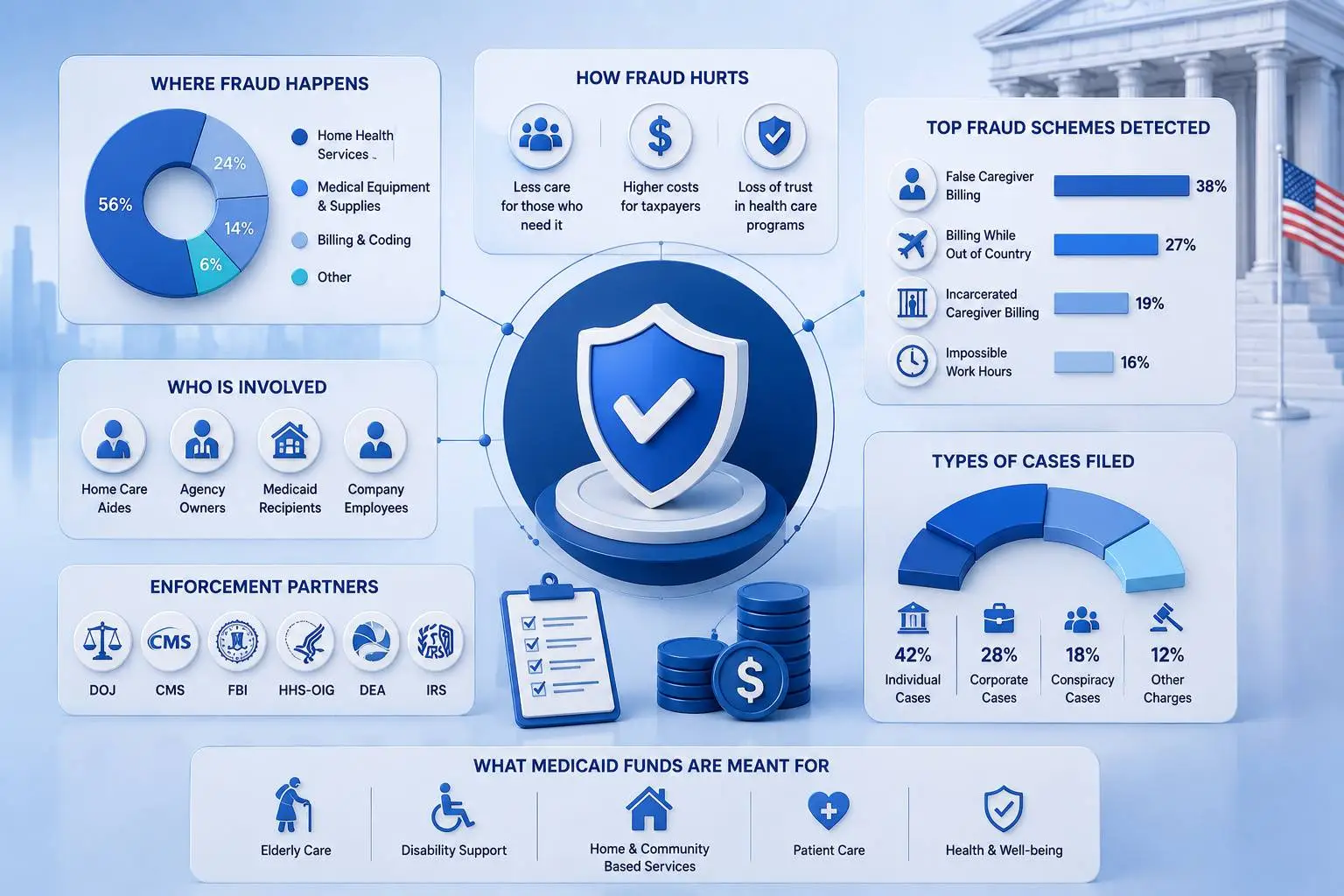
The DOJ is embedding investigators from its newly created National Fraud Enforcement Division (NFED) inside the U.S. Attorney’s Office for the Eastern District of Pennsylvania. The goal is to detect fraud earlier, coordinate investigations faster, and pursue cases against both individuals and corporations involved in health care fraud.
Federal officials described the initiative as a “full-spectrum accountability” strategy, meaning enforcement will target everyone involved in fraudulent activity—from individual caregivers submitting false claims to executives overseeing fraudulent business practices.
How Big Is the Health Care Fraud Strike Force?
Federal officials highlighted the Strike Force’s national track record while announcing the expansion.
Since its creation, the Health Care Fraud Strike Force has prosecuted more than 6,200 defendants accused of collectively billing federal health care programs and private insurers over $45 billion through fraudulent schemes.
The DOJ said expanding into Philadelphia builds on recent Strike Force growth in California, Arizona, Nevada, Massachusetts, and Minnesota as the department continues increasing fraud enforcement nationwide.
The Fraud Schemes Investigators Uncovered
According to prosecutors, many of the newly charged cases involved Medicaid-funded home care services that allegedly never took place.

Investigators claim some caregivers billed Medicaid while they were in prison, hospitalized, traveling overseas, driving for ride-share companies, or even appearing in court. Others allegedly claimed impossible work schedules exceeding 24 hours in a single day, while some submitted claims for patients who were themselves incarcerated.
In one investigation, prosecutors allege a home health aide billed more than 64,000 impossible work hours, leading to over $1.2 million in Medicaid payments. Another case involved fraudulent claims submitted while the caregiver was vacationing outside the United States.
Officials said these examples illustrate how fraud can exploit programs designed to support elderly and disabled Americans receiving care at home.
Officials Say Fraud Hurts Patients and Taxpayers
Justice Department officials emphasized that Medicaid fraud extends beyond financial losses.
Assistant Attorney General Colin M. McDonald said home care funding exists to support vulnerable Americans—not individuals attempting to exploit public programs for personal gain.
CMS Administrator Dr. Mehmet Oz said Medicaid fraud diverts taxpayer dollars away from patients who genuinely need medical services, while FBI and HHS investigators described the crackdown as part of a broader effort to protect public trust in federally funded health care programs.
Why This Matters for the Health Care Industry
While this week’s criminal charges focus on individual Medicaid fraud schemes, the Justice Department’s broader message is aimed at the entire health care industry. The expansion of the Northeast Health Care Fraud Strike Force signals that providers, home care agencies, insurers, and corporate health care organizations should expect greater federal oversight in the years ahead.
The new initiative strengthens cooperation between the DOJ, CMS, FBI, HHS Office of Inspector General (OIG), DEA, IRS, and Pennsylvania authorities. By combining data analytics with coordinated investigations, officials say they can identify suspicious billing patterns more quickly and pursue complex fraud cases more effectively.
A Growing Focus on Corporate Accountability
Federal officials made clear that enforcement efforts are no longer limited to individual caregivers or small fraud rings.
The expanded Strike Force will also investigate companies that allegedly enable or benefit from fraudulent billing practices. Officials said the goal is to hold organizations accountable when corporate systems, management decisions, or internal controls contribute to health care fraud.
The announcement follows several recent corporate enforcement actions involving health care companies and reflects the DOJ’s broader strategy of increasing accountability across the industry.
Why Medicaid Home Care Fraud Is Receiving More Attention
Home care services have become one of Medicaid’s fastest-growing areas of spending as more seniors and people with disabilities receive care in their own homes.
Because caregivers often work independently and record services electronically, investigators say these programs can become vulnerable to false billing, fabricated work hours, identity misuse, and fraudulent reimbursement claims if oversight is weak.
Federal prosecutors said protecting these programs is essential because every fraudulent payment reduces resources available for patients who genuinely rely on Medicaid-funded care.
You may also find these related health insurance stories helpful:
- Trump Ends Medicare Part D Subsidy: What It Means for 2027 Medicare Drug Costs
- DOJ’s Medicare Advantage Fraud Crackdown: Why Complete Health Paid $14.1 Million
- Humana to Exit Medicare Advantage Plans in 2027
- Healthcare Costs Push Consumer Confidence Down as Medical Bills Rise
- Hawaii Family Health Insurance Costs Rise 50% Over 10 Years: Report
- Healthcare Costs Push Consumer Confidence Down as Medical Bills Continue to Rise
- Pennsylvania Health Insurance Rates May Rise 17.1% in 2027 as Some Insurers Seek 40.9% Premium Increase
What’s Next?
The Strike Force’s expansion means investigators will have a permanent federal presence focused on health care fraud in the Eastern District of Pennsylvania.
Officials say the additional resources will support more proactive investigations, greater use of fraud analytics, stronger partnerships with state agencies, and increased enforcement against both individuals and corporate entities suspected of defrauding federal health care programs.
The Justice Department also encouraged companies to voluntarily report misconduct, noting that its updated corporate enforcement policy provides incentives for organizations that promptly disclose wrongdoing and cooperate with investigators.
The Bottom Line
The Philadelphia expansion is more than a local enforcement announcement. It reflects the Justice Department’s broader strategy to strengthen health care fraud investigations nationwide through specialized Strike Force teams, advanced data analysis, and closer collaboration with federal and state agencies.
While the latest cases focus on alleged Medicaid home care fraud, the initiative sends a wider message that federal authorities intend to pursue fraud at every level—from individual false billing schemes to large-scale corporate misconduct affecting taxpayer-funded health care programs.
SOURCES
Frequently Asked Questions (FAQ)
Why did the DOJ expand the Health Care Fraud Strike Force to Philadelphia?
The DOJ said Philadelphia is a major health care hub with a strong history of fraud investigations, making it an ideal location for additional federal enforcement resources.
How many people were charged?
Federal and state prosecutors announced criminal charges against 19 defendants in connection with multiple alleged Medicaid fraud schemes.
What types of fraud were alleged?
Investigators allege false billing for home care services, impossible work hours, claims submitted while caregivers were incarcerated or traveling, and other fraudulent Medicaid reimbursement schemes.
What is the National Fraud Enforcement Division (NFED)?
Created in April 2026, the NFED is the DOJ’s dedicated division focused on investigating and prosecuting fraud involving taxpayer-funded federal programs.
Does this initiative only target individuals?
No. Federal officials said the expanded Strike Force will pursue both individuals and corporate organizations involved in health care fraud.
Why is Medicaid home care fraud a priority?
Officials say fraudulent billing diverts taxpayer money away from elderly, disabled, and vulnerable patients who depend on Medicaid-funded home care services.


