









CMS Autism ABA Toolkit Explained: How States Can Fight Medicaid Fraud and Protect Children


The Centers for Medicare & Medicaid Services (CMS) has introduced a new toolkit designed to help states improve oversight of autism therapy services funded through Medicaid and the Children’s Health Insurance Program (CHIP). The agency says the goal is to protect children, strengthen program integrity, and ensure public healthcare dollars are spent appropriately.
The new Applied Behavior Analysis (ABA) Toolkit is aimed at state Medicaid and CHIP agencies. Rather than creating new federal rules, it offers practical guidance to help states improve clinical oversight, identify fraud, and support evidence-based autism care.
Why CMS Released the Toolkit
CMS says spending on ABA services has grown much faster than the number of children receiving autism treatment. Between 2021 and 2025, Medicaid and CHIP spending on ABA therapy increased by 421%, while the number of children with an autism diagnosis receiving services grew by 67%.
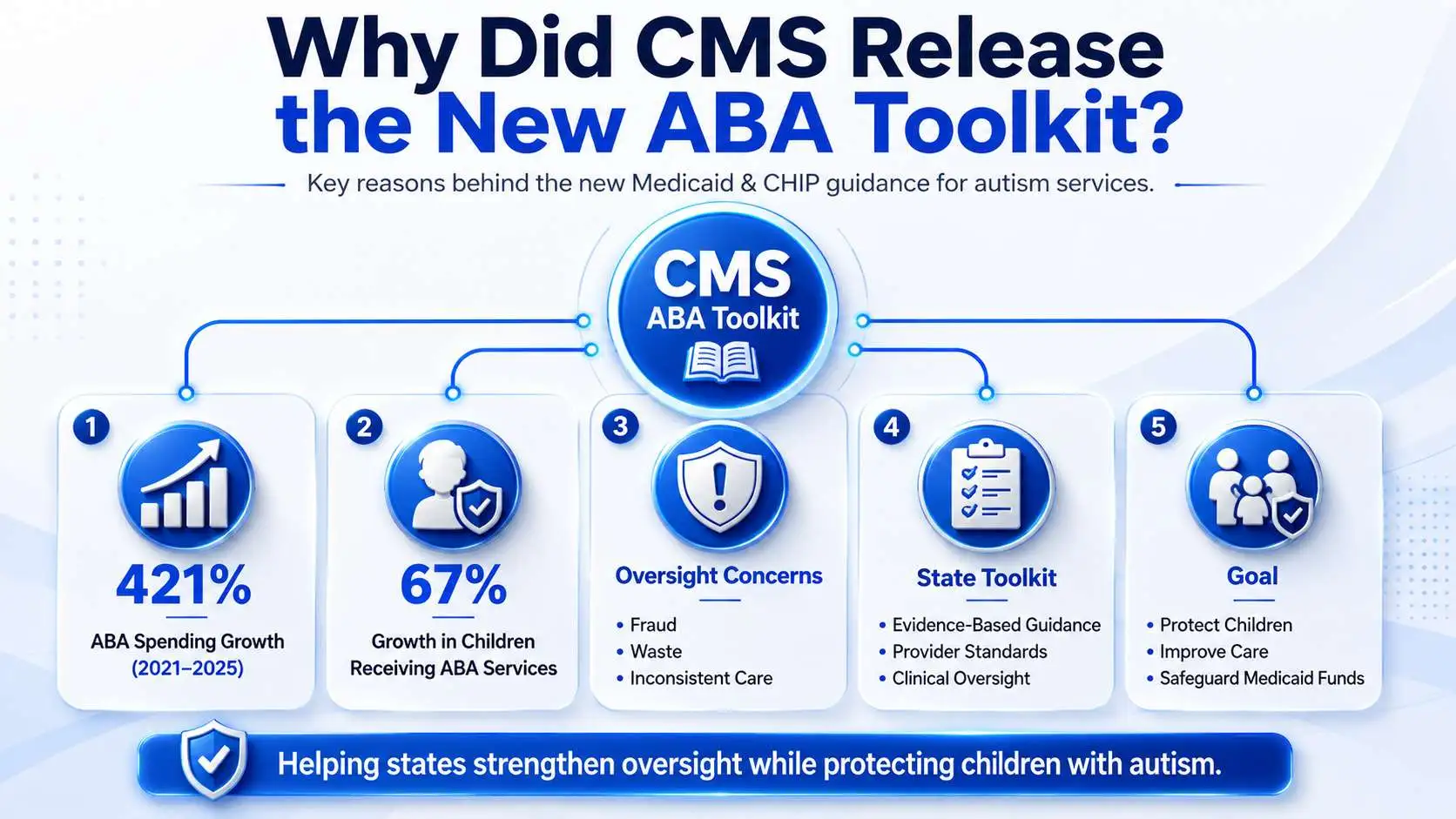
According to the agency, that gap raises questions about whether all services are medically necessary and whether stronger oversight is needed to prevent misuse of public funds.
Concerns Over Fraud and Billing Practices
CMS also pointed to a growing number of investigations involving fraud, kickback schemes, improper billing, and cases where children received inappropriate treatment. Officials say these incidents highlight the need for better safeguards without reducing access to legitimate care.
Health and Human Services Secretary Robert F. Kennedy Jr. said the toolkit gives states practical resources to identify bad actors, protect families, and hold providers accountable while safeguarding taxpayer dollars.
CMS Administrator Dr. Mehmet Oz said families should feel confident that ABA services are individualized, clinically appropriate, and delivered by qualified professionals. He added that reducing fraud helps ensure more healthcare funding reaches children who genuinely need it.
What the Toolkit Actually Does

The toolkit provides recommendations to help states strengthen Medicaid oversight of ABA services. It encourages policies that ensure treatment is based on each child’s medical needs rather than standardized service models or financial incentives.
It also offers guidance on provider qualifications, supervision requirements, payment policies, utilization management, and strategies for identifying fraud, waste, abuse, and improper billing.
What Isn’t Changing
CMS emphasized that the toolkit does not create new federal requirements or reduce Medicaid benefits for children with autism. It also does not change Early and Periodic Screening, Diagnostic, and Treatment (EPSDT) obligations or limit access to medically necessary ABA therapy.
Instead, the resource is intended to help states improve the quality and accountability of existing autism services while maintaining access for eligible children.
What It Means for Families
For parents, the announcement is mainly about improving oversight rather than changing coverage. Families should not expect immediate changes to Medicaid eligibility or autism benefits.
CMS says the toolkit is designed to help ensure children receive personalized, evidence-based treatment from qualified providers while reducing the risk of fraud or unnecessary services.
What It Means for Providers
ABA providers may see states place greater emphasis on clinical documentation, provider credentials, supervision standards, and billing accuracy as they review their Medicaid programs.
Providers already delivering medically necessary, evidence-based care are expected to continue serving eligible children without major disruptions.
You may also find these related health insurance stories helpful:
- Trump Ends Medicare Part D Subsidy: What It Means for 2027 Medicare Drug Costs
- Medicare Fast-Tracks Breakthrough Devices: How CMS RAPID Pathway Cuts Delays to 60 Days
- CMS Expands Medicare Joint Replacement Payment Model: What CJR-X Means for Patients and Hospitals
- Humana to Exit Medicare Advantage Plans in 2027
- Healthcare Costs Push Consumer Confidence Down as Medical Bills Rise
- Hawaii Family Health Insurance Costs Rise 50% Over 10 Years: Report
- Healthcare Costs Push Consumer Confidence Down as Medical Bills Continue to Rise
- Pennsylvania Health Insurance Rates May Rise 17.1% in 2027 as Some Insurers Seek 40.9% Premium Increase
Toolkit Built on Research and State Experience
CMS says the toolkit was developed using Medicaid claims data, more than 40 peer-reviewed studies, over 240 publicly available state Medicaid policy documents, and feedback from state agencies, healthcare providers, advocates, and other stakeholders.
The agency says this approach allows states to adapt the guidance based on their own Medicaid programs while promoting consistent, high-quality autism care.
The Bottom Line
The new ABA Toolkit reflects CMS’s effort to balance two priorities: protecting children with autism while strengthening oversight of Medicaid spending. By helping states improve provider accountability and identify fraud, the agency hopes more healthcare resources will reach children who genuinely need medically necessary autism services.
Sources
- 1. Official CMS Announcement
- https://www.cms.gov/newsroom/press-releases/cms-launches-new-state-toolkit-protect-children-autism-strengthen-oversight-applied-behavior
- 2. Official CMS ABA Toolkit (PDF)
- https://www.medicaid.gov/medicaid/downloads/autism-services-aba-toolkit.pdf
These two official sources are sufficient for this article and provide the original announcement plus the full toolkit referenced throughout the story.
Frequently Asked Questions (FAQ)
1. What is the new CMS ABA Toolkit?
The CMS ABA Toolkit is a guidance resource designed to help state Medicaid and CHIP programs improve oversight of Applied Behavior Analysis (ABA) services for children with autism while protecting families from fraud and inappropriate treatment.
2. Why did CMS release this toolkit?
CMS released the toolkit after Medicaid and CHIP spending on ABA services increased much faster than the growth in autism diagnoses. The agency wants states to strengthen oversight, improve care quality, and reduce fraud and waste.
3. Does the toolkit reduce autism services?
No. CMS clearly states that the toolkit does not reduce medically necessary autism services or change existing Medicaid requirements. It serves as guidance for states rather than creating new federal rules.
4. Who will use the ABA Toolkit?
The toolkit is intended primarily for state Medicaid and CHIP agencies. It can also be useful for healthcare providers, policymakers, and organizations involved in autism services.
5. How does the toolkit help children with autism?
It encourages individualized, evidence-based ABA treatment, promotes qualified provider supervision, and helps ensure services are based on each child’s medical needs instead of financial incentives.
6. How does the toolkit address fraud?
The toolkit provides recommendations that help states identify fraud, waste, abuse, improper billing practices, and provider misconduct while protecting public healthcare funds.
7. Does the toolkit require states to follow new federal rules?
No. The document is a voluntary guidance resource that offers best practices and operational recommendations. States can adapt the guidance based on their Medicaid program structure.
8. Why is this toolkit important for Medicaid and CHIP?
It helps states balance access to medically necessary autism services with stronger oversight, ensuring taxpayer funds are used responsibly while maintaining high-quality care for eligible children.


