









Why Are US Army Apache Helicopters Crashing More Often? The 2026 Safety Data Raises New Questions


The U.S. Army’s AH-64 Apache fleet is facing a growing aviation-safety concern after five major flight mishaps in fiscal year 2026, while the service is simultaneously investigating a transmission problem that can affect critical flight systems.
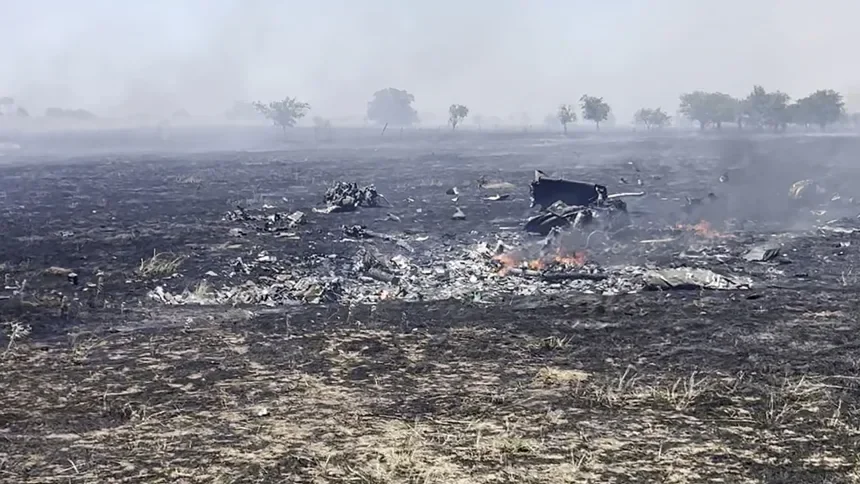
The latest warning sign came on August 12, when an Apache from Fort Hood crashed near Salado, Texas, killing two soldiers and starting a large grass fire. The Army temporarily halted Apache training flights nationwide while officials reviewed the circumstances of the accident. Training operations resumed on August 19 after the service completed a safety and operational review, although the crash investigation remains ongoing.
The Texas crash is not, by itself, proof of a wider mechanical failure. But it came as the Apache fleet was already experiencing an unusually high number of serious mishaps and as Army safety documents identified a potentially dangerous transmission problem affecting the AH-64E model.
That combination has put renewed attention on the reliability and safety of one of the Army’s most important attack helicopters.
Five major Apache mishaps have occurred in fiscal 2026
According to a CNN analysis of Army accident data, the Apache has recorded five Class A flight mishaps in fiscal year 2026 through August 15.
The estimated major-mishap rate is about 6.24 crashes per 100,000 flight hours, based on approximately 80,171 Apache flight hours during the period.
That figure is close to the Apache’s recent high point.
In fiscal year 2024, the aircraft recorded nine major crashes, producing a rate of approximately 7.02 Class A mishaps per 100,000 flight hours.
The current year’s rate has therefore not yet exceeded the 2024 level. But with more than a month remaining in the fiscal year, the number is already close to the worst recent rate identified in the Army’s data.
Apache crash rate at a glance
| Fiscal year | Major Apache mishaps | Rate per 100,000 flight hours |
|---|---|---|
| FY2024 | 9 | 7.02 |
| FY2026* | 5 | 6.24 |
*FY2026 figures are through August 15, 2026.
The comparison matters because accident rates are more useful than simply counting crashes. A fleet flying fewer hours can record fewer accidents while still experiencing a higher accident rate.
The bigger question: What is causing the increase?
This is where the 2026 situation becomes more complicated.
The Army has not said that the transmission problem caused this year’s Apache crashes.
In fact, the service has cautioned that references to transmission safety messages in accident reviews do not establish that the component caused any particular mishap.
Still, the transmission issue is significant.
An Army safety document identified a potential failure in the AH-64E’s main transmission that could result in the loss of tail-rotor thrust, electrical power and hydraulic systems. A failure affecting those systems could seriously compromise the helicopter’s ability to remain under control. The root cause of the transmission problem remained under investigation.
That makes the timing particularly important: the Army is dealing with a known mechanical concern while the fleet is also recording a high number of major accidents.
Dozens of transmissions were flagged for inspection
The problem was not limited to a single aircraft.
An April Army safety message identified 70 potentially faulty transmissions and directed units to ground affected transmissions until further guidance was available. A follow-up message in July added another 10 suspect transmissions to the no-fly list, according to CNN’s reporting.
Together, the safety notices affected roughly one-tenth of the Army’s attack-helicopter fleet, according to the report.
The Army has been working with Apache manufacturer Boeing to inspect and repair affected transmissions. Boeing has deployed teams to Army maintenance depots to support the work.
But the service has not publicly established how many of the 2026 Class A mishaps, if any, were caused by the transmission issue.
That distinction is critical.
A transmission problem exists. A high accident rate exists. That does not automatically mean the transmission problem caused the crashes.
The investigation will have to determine whether the two are connected.
The Texas crash triggered a temporary nationwide training pause
The August 12 crash brought the issue into sharper focus.
The AH-64E Apache was conducting a maintenance test flight near Fort Hood when it crashed in central Texas. Both soldiers aboard were killed.
The Army subsequently ordered a temporary stand-down of Apache training flight operations, saying the pause would remain until officials had a better understanding of the accident’s root cause.
The Army resumed Apache training operations on August 19 following a review of safety procedures and flight operations. The circumstances of the fatal crash remain under investigation.
The temporary grounding therefore should not be interpreted as confirmation that the fleet has a common mechanical defect. It was a safety response while investigators worked to understand the accident.
2024 offers an important comparison
The Apache also experienced a serious accident spike in fiscal year 2024.
The Army recorded nine major Apache crashes that year, and the broader Army helicopter fleet also saw an increase in serious aviation mishaps.
Army leaders responded with a special safety-training initiative. At the time, the service pointed to factors including reduced pilot experience and increasingly complex and intensive training as contributors to the accident increase.
The 2026 picture is less straightforward.
An Army flight-safety publication indicated that slightly more than half of this year’s Apache accidents, including less severe incidents, were primarily attributed to human error. But the same safety reporting also identified a catastrophic transmission failure in one Class A mishap.
That leaves two possible areas of concern: human performance and equipment reliability.
How much each factor contributed to the most serious crashes remains unclear.
The Apache’s broader safety record
The current spike also needs to be viewed in the context of the Apache’s longer safety history.
Army aviation data show that the AH-64 has experienced a substantial number of serious mishaps over the years.
An Army safety review covering fiscal years 2020 through 2024 recorded 105 Class A, B and C Apache mishaps over nearly 586,000 flight hours. Those incidents included 16 Class A mishaps, seven fatalities and 27 injuries, with reported damage totaling about $437.2 million.
The data demonstrate why the Army tracks accident rates rather than relying only on individual crash counts.
A Class A mishap is the military’s most serious accident category and can involve a fatality, permanent disability, destruction or loss of an aircraft, or at least $2.5 million in damage.
The fleet is also under pressure from readiness demands
The safety issue comes at a challenging time for Army aviation.
The Apache remains a major component of Army combat aviation, while the service is managing flight-hour requirements, maintenance demands and modernization plans.
Defense One reported in May that the transmission issue emerged as the Army was also moving to retire older Apache variants and dealing with constraints affecting flight hours.
That creates a difficult balance for the Army.
Aircraft need enough flight time to keep pilots proficient. But increasing flying activity also increases exposure to mechanical wear and operational risk.
At the same time, grounding aircraft for inspections can reduce the number of helicopters available for training and operations.
What the Army still needs to establish
The most important unanswered question is not whether Apache accidents have increased.
The numbers already show that serious mishaps are occurring at an elevated rate compared with many recent years.
The bigger question is why.
Investigators still need to determine:
- How many of the five FY2026 Class A Apache mishaps involved mechanical failures.
- Whether any were connected to the transmission problem.
- Whether the affected transmissions share a common manufacturing, maintenance or design issue.
- Whether pilot experience or training contributed to any of the crashes.
- Whether the current inspection and repair program is sufficient to reduce the risk.
Until those questions are answered, it would be premature to describe the transmission problem as the cause of the Apache crash spike.
But the combination of five major mishaps, a 6.24-per-100,000-hour accident rate, a fatal Texas crash and dozens of potentially affected transmissions gives the Army a significant safety problem to investigate.
What happens next
The Army has already resumed Apache training flights, but the investigations are not over.
The service will need to determine the cause of the Fort Hood crash and continue evaluating the transmission issue across the fleet.
The most important signal in the coming weeks may therefore not be another grounding order. It may be whether the Army identifies a common cause behind multiple accidents—or determines that the 2026 spike has several unrelated causes.
For now, the data point to a fleet under unusual safety scrutiny, but they do not yet provide a single explanation for why Apache mishaps have risen so sharply.
The numbers are clear. The cause is not.


