









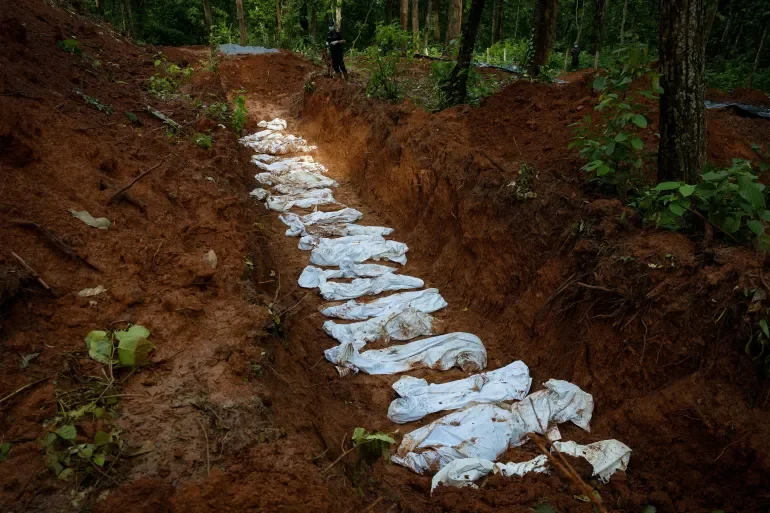
Nepal lowered its flags to half-mast on September 7 as families mourned victims of the devastating August 26 floods, while rescue teams continued searching for thousands of people still missing.
Nepal observed a national day of mourning on Monday for the victims of the catastrophic floods and landslides that struck the country on August 26.
Government offices across Nepal, as well as Nepali diplomatic missions overseas, flew the national flag at half-mast as the country marked the final day of the traditional 13-day mourning period.
The disaster has killed more than 1,300 people, while thousands remain unaccounted for. Search and rescue operations are still continuing, particularly around damaged hydropower projects and tunnels.
Nepal Floods: Key Facts
| Detail | Latest information |
|---|---|
| Disaster began | August 26, 2026 |
| National mourning | September 7, 2026 |
| Death toll | More than 1,300 |
| Missing | Thousands, including more than 5,000 in recent reports |
| Main affected area | Northern and central Nepal |
| Major river involved | Bhote Koshi |
| Major impact | Flooding, landslides and debris |
| Hydropower workers missing | About 900 |
| Workers believed trapped in tunnels | About 500 |
| International rescue support | India, China, South Korea and the U.S. |
| Mourning period | Traditional 13-day period |
Why is Nepal observing a day of mourning?
September 7 marks the 13th day since the disaster, which began after a major collapse of ice, rock and debris in the Himalayan region triggered catastrophic flooding along the Bhote Koshi River and other waterways.
The Nepalese government declared September 7 a national day of mourning.
Flags were ordered to be flown at half-mast as a national tribute to those who died.
The day also coincides with the conclusion of a traditional Hindu mourning period, during which families observe rituals for relatives who have died.
However, the government did not organise large public ceremonies because rescue and search operations are still under way.
Officials said resources remain focused on finding survivors and recovering victims.

More than 1,300 people have died
The precise death toll has continued to change as rescue teams recover bodies from remote and heavily damaged areas.
Nepal’s disaster authorities reported more than 1,300 deaths by September 7, with one government update putting the number of recovered bodies at 1,342, while another update reported 1,355 deaths.
Reuters reported a higher figure of at least 1,380 deaths when the wider disaster affecting Nepal and the Tibet region was counted. More than 5,500 people were reported missing in that combined toll.
The changing figures reflect the continuing recovery operation and the difficulty of reaching some of the worst-hit areas.
Thousands are still missing
The search is far from over.
Thousands of people remain unaccounted for, including workers at hydropower projects in northern Nepal.
Authorities have identified hydropower sites as some of the most difficult areas to search because tunnels and other underground structures were flooded or filled with mud, rocks and debris.
Around 900 hydropower workers were reported missing, with roughly 500 believed to be trapped in tunnels at several projects.
Families have been gathering in Kathmandu to demand faster rescue operations and more equipment to reach people who may still be alive.
Why hydropower tunnels have become a major focus
Nepal’s hydropower infrastructure was badly affected by the disaster.
Floodwater, landslides and enormous amounts of debris damaged access roads, buildings and tunnels, leaving rescue teams facing extremely difficult conditions.
The underground sites are particularly important because rescuers believe some missing workers could still be alive inside them.
Specialist teams from India, China, South Korea and the United States have joined Nepal’s search efforts.
Rescue teams have used excavators, drones and other specialist equipment while working through unstable debris and damaged infrastructure.

Four people have been rescued in recent days
Despite the scale of the disaster, several rescues have offered families a small measure of hope.
Among the survivors rescued in recent days were hydropower workers and a Chinese national who was found alive inside a tunnel.
A 64-year-old Nepali woman was also rescued after spending more than 10 days inside a house that had been buried by mud and debris.
She was found on the fourth floor of the damaged building and taken to hospital in Kathmandu.
The rescues have encouraged teams to continue searching even as the chances of finding survivors become increasingly difficult.
Families of missing workers demand answers
In Kathmandu, relatives of missing hydropower workers have protested outside government offices.
Many families say they have received little information about what happened to their relatives.
Some are still waiting for confirmation of whether loved ones are alive, while others are waiting for bodies to be recovered so traditional funeral rituals can take place.
The uncertainty has added another layer of trauma to a disaster that has already devastated communities across northern and central Nepal.
Nepal’s president visits flood-hit areas
President Ram Chandra Paudel toured areas affected by the disaster on Monday as the country observed its national mourning day.
The visit came as rescue operations continued and authorities assessed the destruction caused by the floods.
The disaster damaged homes, roads, bridges and hydropower facilities across several districts.
Nepal is now facing not only the immediate search-and-rescue operation but also a major reconstruction challenge. Reuters previously reported that authorities estimated around 20,000 homes would need to be rebuilt in flood-ravaged areas.
What caused the Nepal floods?
The disaster began on August 26, when a major collapse involving ice, rock and debris in the Himalayan border region sent an enormous surge of material and water downstream.
The resulting floods and landslides swept through communities along the border between Nepal and China’s Tibet region.
The event destroyed or severely damaged infrastructure and left large areas cut off from normal access.
The scale of the disaster has made rescue operations exceptionally difficult, particularly in mountainous areas where roads and bridges were destroyed.
Nepal’s mourning continues alongside the rescue operation
The national day of mourning is therefore taking place under unusual circumstances.
Rather than marking the end of the disaster, September 7 is another day of searching.
Flags are at half-mast and families are carrying out mourning rituals, but rescue workers remain in the field looking for people who may still be trapped.
For thousands of families, the disaster has not yet reached a conclusion.
They are still waiting for news about missing relatives, while authorities continue recovering bodies and identifying victims.
The recent rescues have also shown why search teams are continuing their efforts despite the passage of nearly two weeks.
What happens next?
Nepal’s immediate priority remains the search for missing people and the recovery and identification of victims.
Authorities will also have to restore damaged roads, bridges, homes and hydropower infrastructure while providing assistance to displaced communities.
The national mourning day gives families an opportunity to remember those who died, but the rescue operation continues.
With thousands still missing, the search for survivors and the recovery of victims remain Nepal’s most urgent tasks.


