









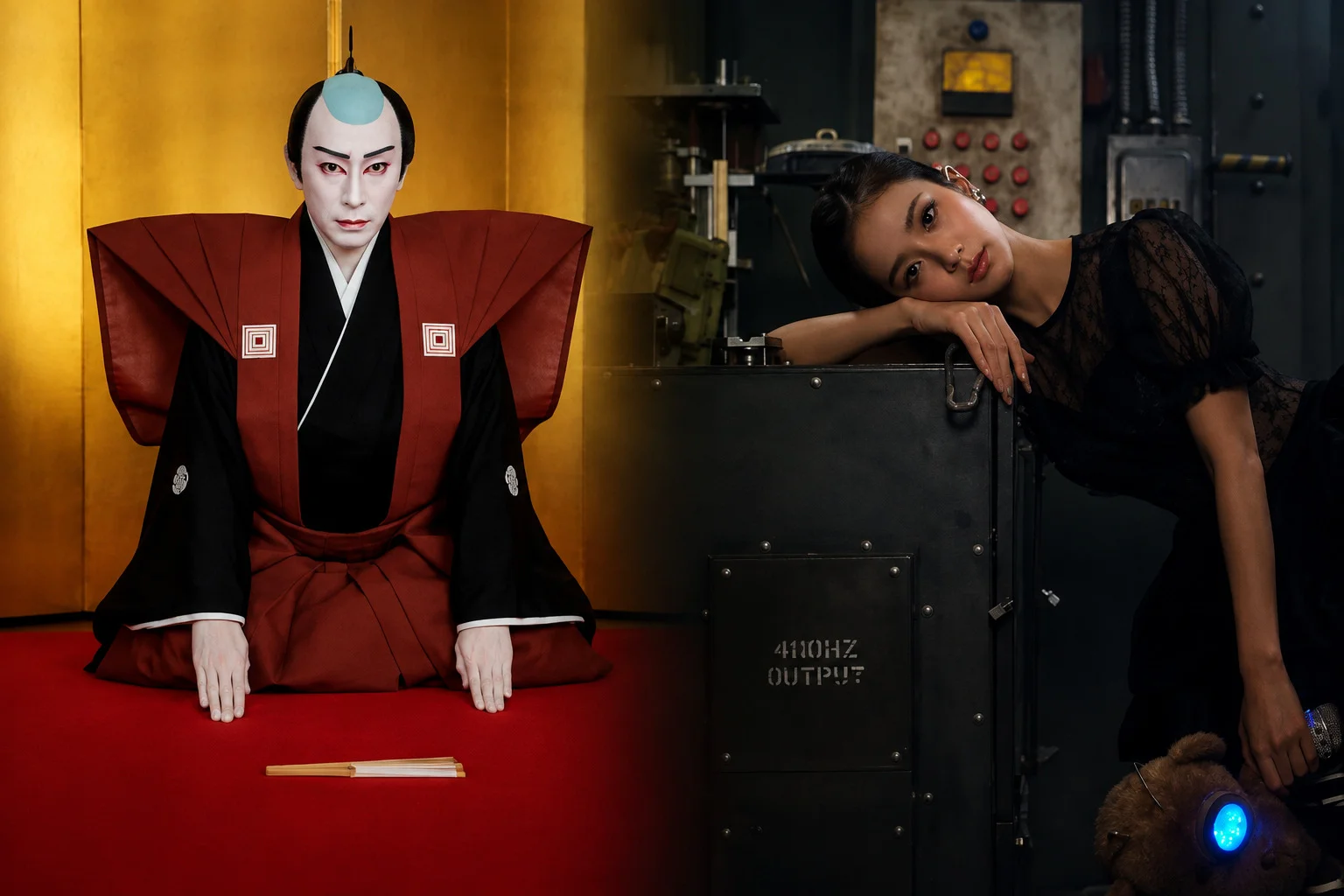
The filmmaker behind more than 100 features turns his camera on kabuki star Ichikawa Danjūrō XIII in his first documentary, screening out of competition at the Venice Film Festival.
Miike Takashi has made well over 100 feature films, moving between crime, horror, action, drama and other genres throughout his career. But until now, he had never directed a documentary.
That changes with “Shumei: The Living Legacy of Kabuki,” which marks Miike’s documentary debut and screens out of competition at the Venice Film Festival.
The film follows the 2022 succession ceremony of Ichikawa Danjūrō XIII, one of kabuki’s most celebrated performers, as he takes on the prestigious Danjūrō name.
For Miike, the project grew out of a relationship that began years before the cameras started rolling.
Danjūrō approached Miike years ago
Danjūrō had already appeared in two of Miike’s films, “Hara-Kiri” and “Blade of the Immortal.” Around eight years ago, he approached the filmmaker about the possibility of being filmed.
Miike recalled that moment as an opportunity he could not turn down.
The director also found Danjūrō unusually difficult to predict. He described the kabuki performer as a kind of “monster” because of his singular energy and presence, particularly on stage. Danjūrō can seem different from one day to the next, something Miike found especially compelling for a documentary subject.
That unpredictability is part of what gives “Shumei” its personal dimension. The film is not simply documenting a major kabuki ceremony; it is following a performer Miike has known both professionally and personally.
Miike leaves the kabuki stage largely alone
Miike has experience filming theatrical performance. He previously worked on the filmed stage production “Demon Pond” and explored theatrical performance in his feature “Over Your Dead Body.”
For “Shumei,” however, he took a more restrained approach.
He did not want to direct the kabuki performances themselves. Instead, he chose to record them as directly and simply as possible, allowing Danjūrō and his son to emerge through the material without turning the stage sequences into a showcase designed around the filmmaker’s own style.
The beauty of kabuki was not the main reason Miike made the documentary. He wanted viewers to become curious about the people behind the performances and, ideally, interested enough to see them perform in person.
Danjūrō is different on stage and on film
Danjūrō’s stage presence is particularly striking. His intense stare and physical force can recall the larger-than-life characters found throughout Miike’s cinema, including Tadanobu Asano’s Kakihara in “Ichi the Killer.”
But Miike sees an important difference between Danjūrō’s work on stage and his performances in films.
Kabuki allows emotions such as anger and sadness to become extremely powerful, but those emotions have to operate within the rules of the performance and the story. The performer is not simply expressing whatever he personally feels at that moment.
Miike has seen another side of Danjūrō when the actor works in film. Away from the strict demands of kabuki performance, he said, Danjūrō can “liberate himself.”
That contrast gives Miike access to something different from a conventional portrait of a celebrated stage performer: the person who exists both inside and outside the kabuki role.
‘Kokuho’ has already brought new attention to kabuki
“Shumei” also arrives as international audiences are becoming more familiar with kabuki.
Much of the recent attention has followed the success of “Kokuho,” the Japanese film that became a major box-office success and received an Academy Award nomination. Miike noted that the film was not made with the full cooperation of the kabuki industry, making its reception particularly notable.
Its success was likely a surprise to many people within the kabuki world, according to Miike. The timing of “Shumei” was not deliberately planned around “Kokuho,” but the earlier film’s reception could help audiences approach another work centered on kabuki.
A succession ceremony at the center
At the heart of “Shumei” is the 2022 succession ceremony in which Ichikawa Danjūrō XIII formally assumed the name associated with one of kabuki’s most important artistic lineages.
The ceremony carries considerable cultural weight, but Miike’s interest goes beyond the ceremony itself.
His approach is deliberately observational, giving the audience space to see Danjūrō and his son away from the idea of kabuki as simply a beautiful or highly formalized tradition.
For a filmmaker whose career has often been associated with extreme characters and distinctive cinematic worlds, the documentary offers a quieter way of observing a performer whose own presence is already powerful enough to dominate the screen.
Miike’s first documentary reaches Venice
“Shumei: The Living Legacy of Kabuki” extends Miike’s long filmmaking career into a form he had never previously attempted.
The project also brings together two people who have crossed paths repeatedly: a director known for more than 100 feature films and a kabuki performer who first gave him the chance to document his life years ago.
The film screens out of competition at the Venice Film Festival.


