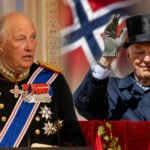






Norway has entered a new royal era as Crown Prince Haakon succeeds his father, King Harald V, becoming the country’s new monarch at 53.
Norway has a new king.
Crown Prince Haakon has succeeded his father, King Harald V, following the monarch’s death on Friday, August 28, 2026. Harald died peacefully at Oslo University Hospital Rikshospitalet at 6:35 a.m. local time, according to the Norwegian Royal Court. He was 89.
The succession brings an immediate change at the top of Norway’s constitutional monarchy after Harald’s more than three decades on the throne. Haakon, who had increasingly taken on official responsibilities while his father’s health declined, now begins his own reign as King Haakon VIII.
For Haakon, the moment is the culmination of a role he has been preparing for since becoming Crown Prince in 1991.
Who Is King Haakon VIII?
Born on July 20, 1973, Haakon is the only son of King Harald V and Queen Sonja.
For most of his adult life, he was known to the Norwegian public as Crown Prince Haakon. He spent decades carrying out official duties on behalf of the royal family and periodically served as regent when his father was unable to perform his constitutional responsibilities.
His accession therefore does not represent a sudden arrival in Norwegian public life. Haakon has spent years gradually moving toward the position he now holds.
Reuters described him as a reluctant prince who struggled with the attention and expectations that came with being born into the royal family. In his 2023 autobiography, Haakon, he recalled feeling uncomfortable discussing his royal status while growing up. Over time, however, he adapted to the role and increasingly embraced his responsibilities.
That transition—from an uneasy young prince to a prepared heir—is an important part of Haakon’s story as he begins his reign.
From Crown Prince to King
Haakon became Crown Prince in 1991 when his father succeeded King Olav V.
Over the following decades, he represented Norway at official events at home and abroad, undertook state visits and carried out constitutional duties. As Harald grew older and experienced repeated health problems, Haakon took on an increasingly visible role.
The Norwegian Royal Court listed him as Crown Prince Regent during periods when Harald was on sick leave. In the days immediately before Harald’s death, Haakon was again performing official duties as regent while his father remained hospitalized.
His experience means the new king enters the throne with a detailed understanding of the institution he now leads.
King Harald V of Norway Dies at 89 After 35 Years on the Throne
Why Haakon’s Accession Is Different From a Coronation
Norway does not use a traditional coronation ceremony for its monarchs.
The transition to Haakon’s reign is therefore centered on constitutional and ceremonial procedures rather than a coronation spectacle. Reuters reported that an extraordinary Council of State is expected to form part of the transition, with the new king informing the government of his father’s death and formally taking up his constitutional role. Haakon is also expected to swear an oath to Norway’s Constitution and laws before the Storting, the country’s parliament.
A later consecration ceremony may take place at Nidaros Cathedral in Trondheim, but that is distinct from a formal coronation.
The approach reflects Norway’s relatively understated royal tradition.
Who Is Queen Mette-Marit?
Haakon’s accession also changes the position of his wife, Mette-Marit.
Born Mette-Marit Tjessem Høiby in Kristiansand in 1973, she came from outside the royal establishment and was a single mother when her relationship with Haakon became serious.
The couple married in Oslo in 2001 after announcing their engagement the previous year. Their relationship initially generated considerable public discussion because Mette-Marit was a commoner and had a young son from a previous relationship.
Over the years, however, Haakon and Mette-Marit developed a prominent public role within the Norwegian monarchy.
Mette-Marit has also faced significant personal and public challenges in recent years. She was diagnosed with pulmonary fibrosis and underwent a lung transplant in 2026. The royal court announced in July that she had been discharged from Oslo University Hospital following the procedure.
Her position will now be closely watched as Haakon begins his reign.
Who Are King Haakon VIII’s Children?
Haakon and Mette-Marit have two children: Princess Ingrid Alexandra and Prince Sverre Magnus.
Their eldest child, Ingrid Alexandra, is now directly affected by her father’s accession.
With Haakon becoming king, Ingrid Alexandra becomes the next heir to the Norwegian throne. She is therefore set to play a much more important role in the royal family as the next generation of the monarchy comes into view.
Prince Sverre Magnus remains second in line behind his sister.
Mette-Marit also has an older son, Marius Borg Høiby, from a previous relationship. He is part of the family but is not in the line of succession to the Norwegian throne.
Princess Ingrid Alexandra and Norway’s Next Generation
The elevation of Ingrid Alexandra gives Haakon’s accession another long-term significance.
Norway is not simply moving from one monarch to another. The succession also places a new generation of the royal family closer to the center of public life.
Ingrid Alexandra was born in 2004 and has already undertaken public engagements and military-related training as she prepares for a future role within the monarchy.
Her position as the next heir means that attention will increasingly shift toward how she develops her public role under her father’s reign.
For Norway’s monarchy, Haakon’s accession is therefore both a change of monarch and the beginning of a generational transition.
What Will King Haakon VIII Actually Do?
Norway is a constitutional monarchy, meaning the king is the country’s head of state but does not govern the country in the manner of an executive president.
The government and parliament remain responsible for political decision-making.
The monarch’s duties are largely constitutional, ceremonial and representative. The king formally participates in the formation of governments, presides over the Council of State and represents Norway during state occasions and diplomatic events.
Haakon’s public role will therefore be less about political power and more about continuity, representation and the constitutional functioning of the state.
That distinction is important as Norway moves from Harald’s long reign to a new monarch.
The Challenges Facing Norway’s New King
Haakon inherits a royal institution that remains popular but is facing greater scrutiny.
The Norwegian royal family has experienced a series of controversies in recent years, including questions surrounding members of Haakon’s immediate and extended family. These issues are likely to remain part of the public discussion as the new king establishes his reign.
Haakon’s challenge will be to maintain public confidence in an institution that depends heavily on personal credibility and public support.
His relatively low-key style and long experience as crown prince could help him make the transition. But becoming king also means that decisions and controversies surrounding the wider royal family will increasingly be viewed through the lens of his leadership.
A New Chapter After Harald V
Harald V’s death closes one of the longest chapters in modern Norwegian royal history.
He became king in 1991 after the death of his father, Olav V, and remained Norway’s monarch for more than 35 years. During that period, he became closely associated with a modern, accessible image of the Norwegian monarchy.
Haakon now inherits that legacy.
But his reign will not simply be a continuation of his father’s. At 53, he begins his kingship with decades of preparation behind him and a younger generation already waiting in the succession.
The immediate transition may be understated, as Norway traditionally favors relatively modest royal ceremonies. But its significance is substantial: the country has moved from the Harald era into the reign of King Haakon VIII.
For Haakon, the reluctant prince has finally become king.