









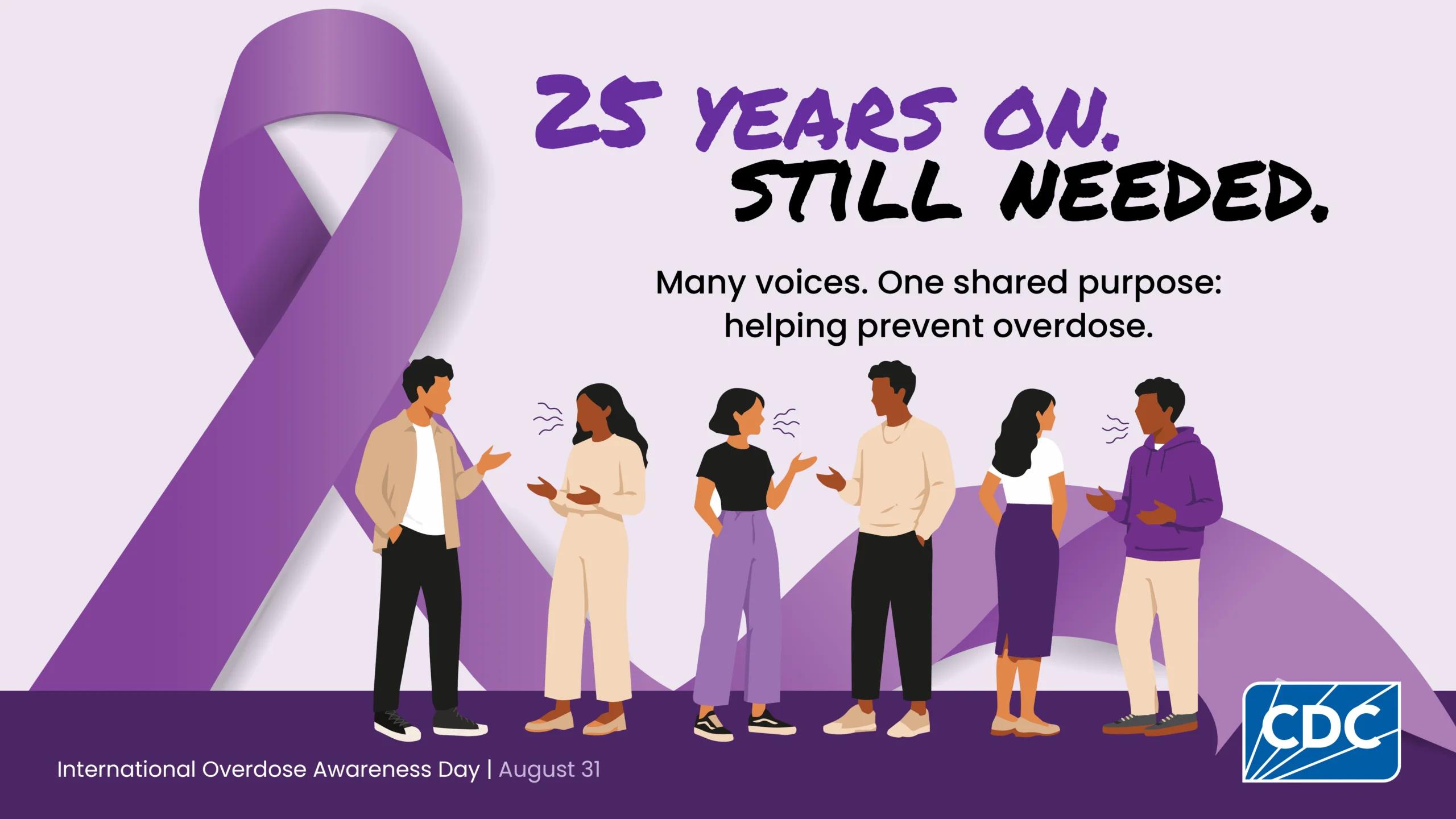
International Overdose Awareness Day 2026 is being observed on August 31, marking 25 years of global remembrance and action. This year’s theme, “25 Years On. Still Needed.,” highlights the continuing need for overdose prevention, treatment, recovery support and evidence-based action.
International Overdose Awareness Day 2026: What is it?
International Overdose Awareness Day (IOAD) is observed every year on August 31 to remember people who have died from overdose, support people affected by substance use and raise awareness about ways to prevent overdose.
In 2026, the campaign marks 25 years of remembrance and action. The Centers for Disease Control and Prevention (CDC) is encouraging communities, healthcare professionals and the public to use the occasion to promote prevention and connect people with trusted treatment and recovery resources.
The CDC’s official theme for 2026 is “25 Years On. Still Needed.”
The message emphasizes that overdose continues to affect people and families across communities, but that overdose deaths can be prevented through timely intervention, treatment, education and access to lifesaving medications such as naloxone.
What does “25 Years On. Still Needed.” mean?
The 2026 theme focuses on three central messages.
First, overdose continues to affect people from all walks of life. Behind overdose statistics are individuals, families and communities dealing with loss and grief.
Second, overdose is preventable. Evidence-based approaches can reduce the risk of fatal overdose and help people access treatment and recovery support.
Third, continued action is necessary. The CDC is urging partners to keep sharing accurate information, promoting compassionate conversations and connecting people with prevention and treatment services beyond August 31.
The CDC is also framing its work around the message: “Still Needed. Still Taking Action. Still Saving Lives.”
Why is International Overdose Awareness Day important?
The day serves both as a remembrance campaign and as a public-health awareness effort.
For families who have lost loved ones, IOAD provides an opportunity to remember those who died and recognize the impact of overdose on relatives, friends and communities.
For people affected by substance use, the campaign promotes supportive, person-centered language and encourages access to treatment and recovery resources.
For the wider public, it provides information about recognizing an overdose and responding quickly.
The CDC says proven strategies—including naloxone, education, timely access to care, medications for opioid use disorder and recovery support—can save lives.
How to recognize an opioid overdose
Recognizing an overdose can sometimes be difficult. The CDC advises treating a situation as an overdose if you are unsure, because acting quickly can save a life.
Possible signs of an opioid overdose include:
- The person cannot be awakened or is unconscious.
- Breathing is slow, shallow or difficult.
- The person makes choking, gurgling or snoring-like sounds while they cannot be awakened.
- The person’s skin may become discolored, particularly around the lips or fingernails.
- The pupils may become very small or “pinpoint.”
If an opioid overdose is suspected, administer naloxone or another opioid overdose reversal medication if available and call 911.
The CDC also advises trying to keep the person breathing and placing them on their side to help prevent choking. The person should not be left alone.
What is naloxone and why is it important?
Naloxone is an opioid overdose reversal medication that can rapidly reverse an opioid overdose when administered in time.
The CDC is highlighting access to naloxone as part of its IOAD 2026 prevention messaging. The campaign encourages people to learn how naloxone works, understand how to use it and share reliable information about its availability.
The broader goal is to make sure people know that an overdose emergency can require immediate action rather than waiting to see whether the person recovers on their own.
CDC releases new overdose-related data and resources
The CDC is also using International Overdose Awareness Day 2026 to highlight new data and resources.
On August 27, the agency released a new Morbidity and Mortality Weekly Report examining buprenorphine dispensed by pharmacies and administered in emergency departments across urban and rural areas of the United States from 2019 through 2025.
The report examines access to buprenorphine, an important medication used in the treatment of opioid use disorder.
The CDC has also updated its SUDORS dashboard with 2025 overdose death data and an enhanced trend view. The dashboard allows users to examine overdose patterns over multiple years, including information on drugs involved, demographics and circumstances surrounding deaths.
How can people participate in International Overdose Awareness Day 2026?
The CDC is encouraging individuals, healthcare organizations and community groups to participate in several ways.
People can share trusted overdose prevention information on social media and use campaign hashtags including #IOAD2026, #25YearsStillNeeded and #EndOverdose.
Organizations can also hold remembrance or awareness events, provide information about naloxone and treatment, and connect people with local recovery services.
The CDC recommends using person-centered language when discussing substance use, overdose, treatment and recovery.
The campaign is not intended to end when August 31 passes. The CDC encourages partners to continue sharing prevention information and connecting people with support throughout the year.
What is the message behind IOAD 2026?
International Overdose Awareness Day 2026 combines remembrance with a call for continued action.
Twenty-five years after the global campaign began, the CDC says the need for overdose prevention remains. At the same time, the campaign emphasizes that prevention strategies can make a difference.
For families, August 31 is a day to remember people who have died. For people in recovery, it is an opportunity to reinforce support. And for communities, it is a reminder that education, treatment, naloxone and timely intervention can help save lives.
Key Takeaway
International Overdose Awareness Day 2026 is being observed on August 31 under the theme “25 Years On. Still Needed.” The CDC is using the 25th anniversary to highlight overdose prevention, naloxone, treatment and recovery support while encouraging communities to continue taking action against preventable overdose deaths.
Source: Centers for Disease Control and Prevention (CDC), International Overdose Awareness Day 2026 Partner Toolkit, updated August 27, 2026.


