









Maggie Gyllenhaal Rejected AI Marilyn Monroe After Dakota Johnson’s Performance Moved Her More

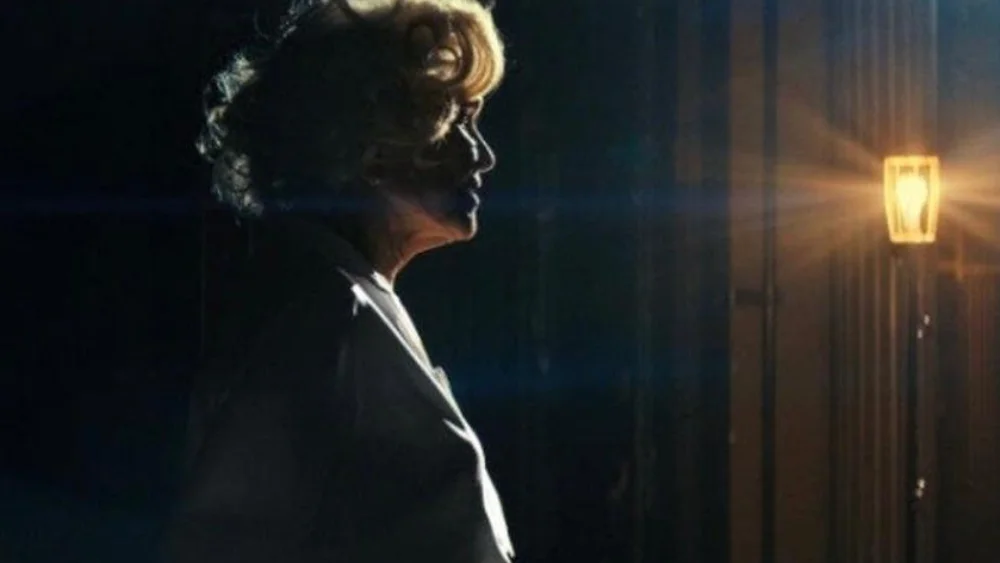
Maggie Gyllenhaal was asked to use artificial intelligence to recreate Marilyn Monroe for her Venice short film Flesh Impact. She tried it but ultimately abandoned the experiment after deciding that Dakota Johnson’s performance was more human, moving, and alive.
Gyllenhaal revealed the AI experiment during a creativity summit in Venice on Sept. 4, shortly before Flesh Impact was set to premiere at the Venice Film Festival.
The 17-minute film imagines Monroe at 100, giving the actress a chance to express herself in a way Gyllenhaal believes she was rarely allowed to during her lifetime.
Why Maggie Gyllenhaal rejected the AI version
The filmmakers were asked to create an AI version of Monroe using licensed footage from her films. The technology was trained on Monroe’s existing performances, with the plan to place her AI-generated face over Johnson’s performance.
Gyllenhaal agreed to test the idea because she was curious about what the technology could achieve.
But after extensive work on the experiment, she decided not to use it.
What she saw coming through Johnson’s performance felt more emotionally authentic than the AI recreation. For Gyllenhaal, that human quality was central to why the film existed in the first place.
The director said the AI version ultimately undermined the project’s purpose rather than enhancing it.
Dakota Johnson plays Marilyn Monroe
Johnson plays Monroe during the height of her fame, while Academy Award winner Ellen Burstyn portrays an imagined Monroe later in life.
Gyllenhaal deliberately chose Johnson even though she does not closely resemble Monroe.
That difference became part of the film’s concept. Gyllenhaal said Monroe has been so heavily transformed into an icon that the real person behind the familiar image can feel distant.
Rather than attempting to reproduce Monroe’s appearance exactly, Gyllenhaal wanted to explore the humanity behind the image.
The film therefore treats Johnson’s performance as an interpretation rather than a physical imitation.
What is ‘Flesh Impact’ about?
Flesh Impact imagines Marilyn Monroe reaching the age of 100 and walking into an audition.
The audition becomes a space where she can finally speak for herself and consider her identity as an artist.
Gyllenhaal chose an audition because she sees acting as an unusually vulnerable profession. An actor has to expose emotion and physicality while knowing that rejection can come at any moment.
That idea also connects to Gyllenhaal’s own background as an actress and filmmaker.
The title Flesh Impact comes from filmmaker Billy Wilder’s description of Monroe’s screen presence — the feeling that audiences could almost reach out and touch her.
Gyllenhaal uses that idea while also questioning what it means for an actress to have her body constantly observed and consumed by an audience.
Ellen Burstyn joins Dakota Johnson as Monroe
Burstyn plays an imagined older version of Monroe in the short.
Her casting gives the film a direct connection between Monroe’s public image and the possibility of the life she might have lived had she survived.
Monroe died on Aug. 4, 1962, at the age of 36.
Burstyn is also receiving the Golden Lion for Lifetime Achievement at this year’s Venice Film Festival, where Gyllenhaal is serving as president of the competition jury.
Peter Sarsgaard and The Pitt star Sepideh Moafi round out the cast.
A short film built around Marilyn Monroe at 100
The idea for Flesh Impact came after Genesis commissioned Gyllenhaal to make a film marking Monroe’s centennial.
Instead of making a conventional Monroe biographical story, Gyllenhaal imagined the actress at 100.
The concept arrived quickly and remained a short from the beginning. The completed film runs for 17 minutes.
The project was produced with the involvement of Monroe estate holders Authentic Brands Group and is presented by Genesis.
Gyllenhaal also questions the economics of AI filmmaking
The Monroe experiment led Gyllenhaal into a broader discussion about artificial intelligence and the future of filmmaking.
She questioned the argument that AI will simply democratize filmmaking by allowing expensive projects to be produced for a fraction of their traditional budgets.
Gyllenhaal suggested that a production costing tens of millions of dollars could eventually be made for a few million, or even much less.
But she said that development raises a bigger question: if studios can make projects cheaply using AI, they may become less willing to finance traditionally produced films.
For Gyllenhaal, the issue is not simply whether AI technology works. It is also about who controls the technology and who benefits financially from its use.
‘Flesh Impact’ premieres at Venice
Flesh Impact will have its world premiere at the 83rd Venice Film Festival on Sept. 7 in Sala Grande.
The premiere comes as Gyllenhaal returns to Venice several years after The Lost Daughter premiered at the festival.
Her latest film puts the focus on Marilyn Monroe, but its central question is broader: what happens when an image that has been consumed for decades is finally given the opportunity to speak for itself?
For Gyllenhaal, the answer ultimately required a human performer rather than an AI recreation.


