









A new PYMNTS Intelligence survey found that rising healthcare costs are making many Americans less confident about their finances. While 51% of consumers continue to struggle with everyday living expenses, healthcare-related costs—including insurance premiums, prescriptions, dental care, and copays—are becoming a major source of financial pressure across different age groups.

Healthcare Costs Weigh on Household Budgets
Healthcare costs are putting increasing pressure on American households, according to a new PYMNTS Intelligence survey of 2,747 U.S. adults.
The study found that 51% of consumers are struggling with everyday living expenses, while confidence in managing those costs has fallen by 9 percentage points since the previous survey.
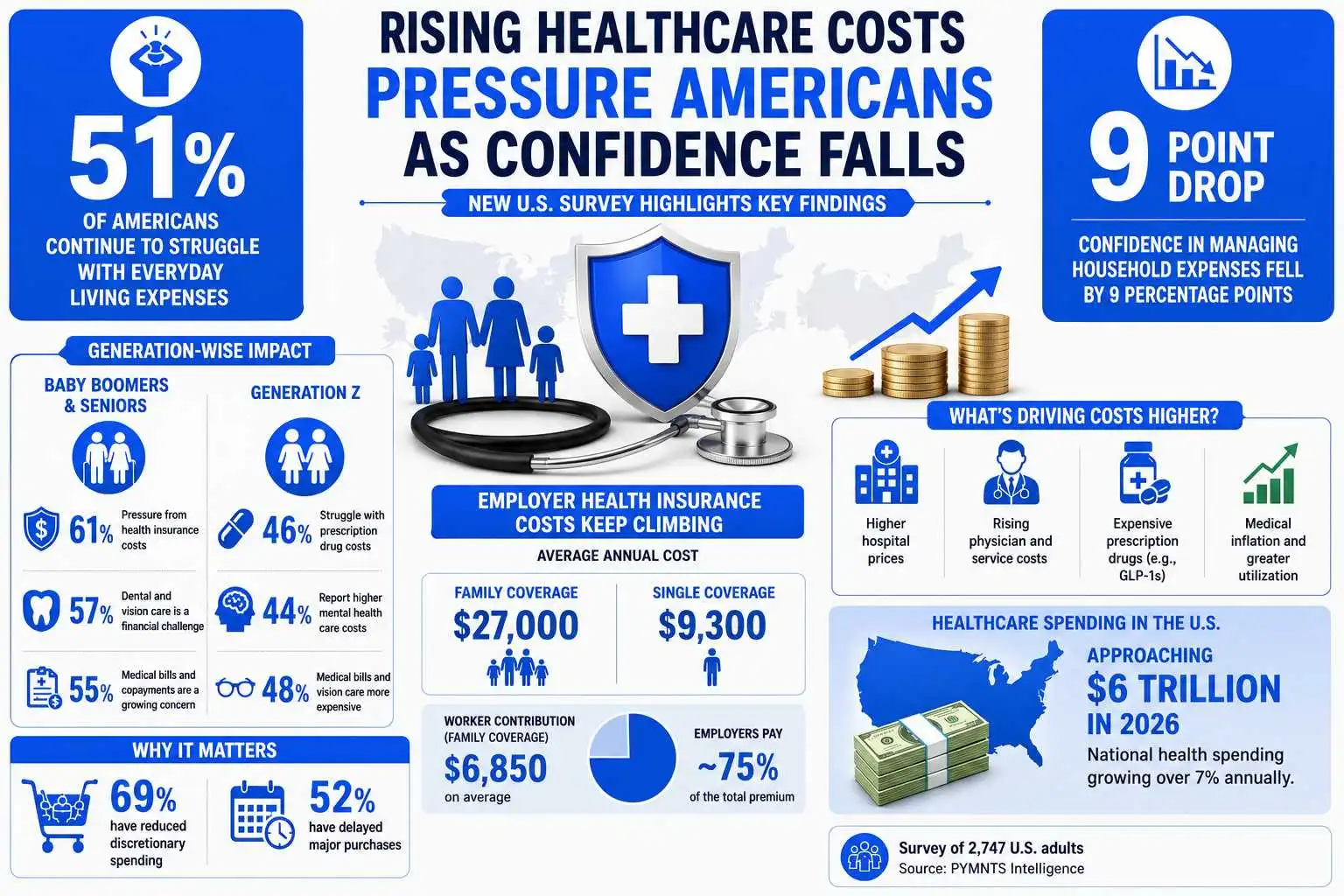
Researchers say recurring healthcare expenses—including insurance premiums, prescription drugs, dental care, and medical copayments—are becoming a growing source of financial strain.
Older Adults Face Higher Routine Healthcare Costs
Among Baby Boomers and seniors, 61% reported pressure from health insurance costs, while 57% said dental and vision care had become a financial challenge. More than half also cited medical bills and copayments as a growing concern.
Gen Z Reports Rising Prescription Costs
For younger adults, prescription medicines and mental healthcare were among the fastest-growing expenses. The survey found 46% of Gen Z respondents struggled with prescription costs, while 44% reported higher mental health expenses.
Employer Health Insurance Keeps Getting More Expensive
The findings come as employer-sponsored health insurance continues to become more expensive across the United States.
According to KFF, the average annual family health insurance premium is now about $27,000, while workers contribute around $6,850 toward family coverage each year, in addition to deductibles and other out-of-pocket costs.
Why Costs Continue to Rise
Healthcare experts point to several factors behind higher costs, including rising hospital prices, physician fees, specialty prescription drugs such as GLP-1 medications, and broader medical inflation. Increased use of healthcare services has also pushed insurance costs higher.
Healthcare Spending Continues to Grow
CMS projects U.S. healthcare spending will approach $6 trillion in 2026, driven by continued demand for medical services and prescription drugs. National health spending has been growing at more than 7% annually in recent years.
Expert Perspective
The findings reflect a broader trend seen across the U.S. healthcare system. While employer-sponsored health insurance remains the primary source of coverage for millions of Americans, premiums, deductibles, and out-of-pocket expenses have continued to rise in recent years.
As healthcare becomes more expensive, affordability is emerging as one of the biggest financial concerns for many households, especially those managing chronic conditions or relying on ongoing prescription medications.
Experts say understanding insurance benefits, comparing available coverage during enrollment periods, and reviewing annual healthcare expenses can help consumers make more informed financial decisions.
You may also find these related health insurance stories helpful:
- Trump Ends Medicare Part D Premium Subsidy: What It Means for 2027—Find out how the end of the temporary Medicare Part D premium stabilization program could affect prescription drug plan premiums and Medicare beneficiaries in 2027.
- Humana to Exit Medicare Advantage Plans in 2027—Learn why Humana is discontinuing selected Medicare Advantage plans affecting around 600,000 members, what prompted the decision, and what current members should expect next.
- Hawaii Family Health Insurance Costs Rise 50% Over 10 Years—See why Hawaii recorded the largest increase in employer-sponsored family health insurance costs in the U.S. and how it compares with the national average.
Why It Matters for Consumers
The report suggests that healthcare costs are affecting more than just monthly budgets. As medical expenses become a larger part of household spending, many families are changing how they manage their finances.
According to the survey, consumers are responding by cutting everyday spending, delaying major purchases, and using multiple strategies to cope with higher living costs. Across all respondents, 69% said they had reduced discretionary spending, while 52% postponed significant purchases to help balance their budgets.
Health policy experts say rising healthcare costs can have longer-term consequences as well. Federal health data has consistently shown that people facing medical debt are more likely to delay treatment, skip prescription medications, or postpone preventive care because of cost concerns.
The Bottom Line
A new PYMNTS Intelligence survey shows healthcare costs are becoming a bigger financial burden for Americans, contributing to a decline in consumer confidence. As insurance premiums, prescription drug prices, and routine medical expenses continue to rise, affordability remains a growing concern for households across the United States.
Sources
- PYMNTS Intelligence — https://www.pymnts.com/
- KFF — https://www.kff.org/
- Centers for Medicare & Medicaid Services (CMS) — https://www.cms.gov/
Frequently Asked Questions
1. Why are healthcare costs affecting consumer confidence?
According to the PYMNTS Intelligence survey, rising health insurance premiums, prescription drug costs, and routine medical expenses are making it harder for many Americans to manage their household budgets, reducing confidence in their finances.
2. What did the survey find about Americans’ financial situation?
The survey found that 51% of Americans are struggling with everyday living expenses, while confidence in managing those costs has fallen by 9 percentage points compared with the previous survey period.
3. Which age groups are most affected by rising healthcare costs?
The report found that Baby Boomers and seniors are more affected by health insurance, dental, and vision expenses, while Gen Z reported growing pressure from prescription drugs and mental health care costs.
4. How much does employer-sponsored health insurance cost in the United States?
According to KFF, the average annual employer-sponsored family health insurance premium is now about $27,000, with workers contributing an average of around $6,850 toward family coverage.
5. Why are healthcare costs continuing to rise?
Healthcare costs continue to increase because of higher hospital and physician charges, rising prescription drug spending, medical inflation, and greater demand for healthcare services.
6. How are Americans responding to higher healthcare costs?
Many consumers are adjusting their budgets by reducing discretionary spending, delaying major purchases, and looking for ways to better manage recurring healthcare expenses.
7. Will healthcare costs continue to increase?
Federal projections indicate that U.S. healthcare spending is expected to keep rising, suggesting affordability will likely remain a major concern for consumers, employers, and policymakers.


