









The average cost of health insurance in the United States is about $625–$687 per month for a 40-year-old purchasing an ACA Marketplace Silver plan before subsidies. However, the amount you actually pay depends on your age, state, income, plan type, and whether you receive coverage through an employer or the Health Insurance Marketplace. Many Marketplace enrollees qualify for premium tax credits, while employer-sponsored plans typically cost employees much less because employers pay a large share of the premium. Beyond the monthly premium, it’s also important to compare deductibles, copays, coinsurance, and out-of-pocket maximums before choosing a plan.

average cost of health insurance
Health insurance costs in the U.S. vary significantly based on where you live and the type of plan you choose. For most adults buying their own coverage through the ACA Marketplace, a Silver plan remains the benchmark for comparing prices because it balances monthly premiums with out-of-pocket costs and is used to calculate premium subsidies.
Employer-sponsored health insurance generally costs employees much less because employers typically pay around 70–80% of the total premium. Marketplace plans may also become much more affordable if you qualify for federal premium tax credits.
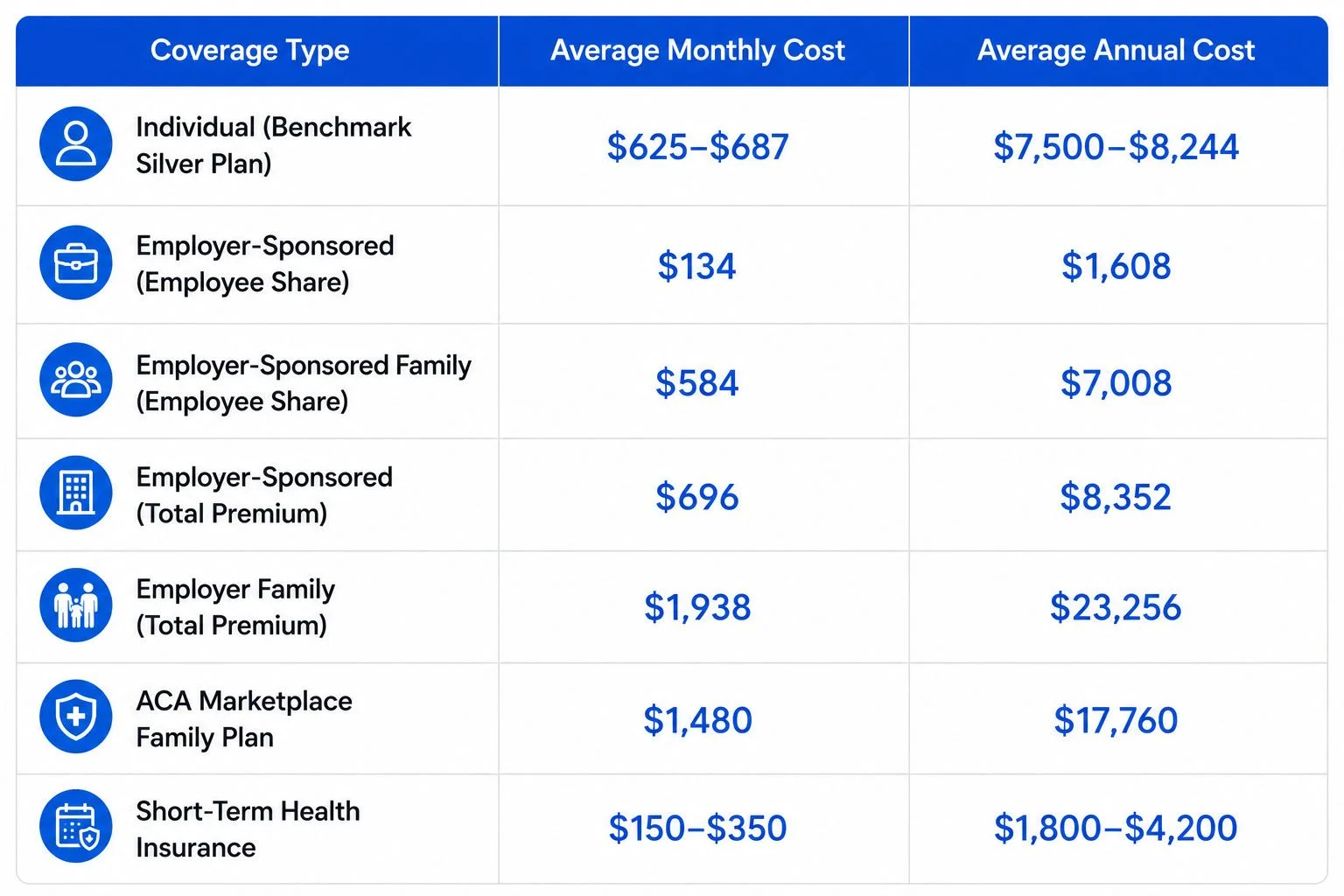
Key takeaway: While the average Marketplace premium for a single adult is around $625–$687 per month, many Americans pay substantially less through employer-sponsored insurance or ACA premium subsidies.
Average Annual Health Insurance Cost
While most insurance plans are priced with a monthly premium, comparing the annual cost gives a clearer picture of your total spending over a full year. Multiplying your monthly premium by 12 can help you estimate your yearly insurance cost before deductibles, copayments, coinsurance, and other out-of-pocket expenses.
| Coverage Type | Estimated Annual Premium* |
|---|---|
| Individual | $5,100–$6,000 |
| Couple | $10,000–$12,500 |
| Family | $17,000–$19,000 |
Average Health Insurance Cost by Age
Age is one of the biggest factors affecting health insurance premiums. Under Affordable Care Act (ACA) rules, insurers can generally charge older adults up to three times more than younger adults because healthcare costs typically increase with age.
Children and young adults usually pay the lowest premiums, while adults in their 60s often face the highest monthly costs before Medicare eligibility.

Health Insurance Cost by State
Where you live can affect your health insurance premium just as much as your age. States with more insurer competition and reinsurance programs generally have lower premiums, while states with smaller insurance markets often experience significantly higher costs.
The table below compares average benchmark Silver plan premiums for a 40-year-old individual purchasing coverage through the ACA Marketplace.
| State | Average Monthly Cost |
|---|---|
| New Hampshire | $401 |
| Maryland | $414 |
| Minnesota | $448 |
| Virginia | $455 |
| Indiana | $474 |
| Rhode Island | $506 |
| California | $570 |
| North Carolina | $638 |
| Texas | $661 |
| Florida | $683 |
| New York | $817 |
| Alaska | $1,032 |
| West Virginia | $1,073 |
| Wyoming | $1,090 |
| Vermont | $1,299 |
What this means for consumers
- Cheapest states: New Hampshire, Maryland, Minnesota, Virginia, and Indiana generally have the lowest Marketplace premiums.
- Most expensive states: Vermont, Wyoming, West Virginia, and Alaska consistently report the highest benchmark premiums.
- National average: Around $625 per month for an individual benchmark Silver plan, though actual premiums may be much lower after premium tax credits.
- Even if two people choose the same plan type, living in different states can result in hundreds of dollars of difference in monthly premiums due to insurer competition, state regulations, and local healthcare costs.
Health Insurance Cost by Metal Tier
Health insurance plans are grouped into four metal tiers. Each tier offers a different balance between monthly premium and out-of-pocket costs.
- Bronze: Around $420/month. Lowest monthly premium, but the highest deductible and out-of-pocket costs.
- Silver: Around $560/month. A balanced option that offers moderate premiums and medical costs. It’s also the benchmark plan for ACA subsidies.
- Gold: Around $665/month. Higher monthly premium with lower deductibles and copays, making it suitable for people who expect regular healthcare.
- Platinum: Around $780/month. Highest monthly premium but the lowest out-of-pocket costs, ideal for people who frequently use medical services.
Quick takeaway: Bronze plans cost less each month but more when you receive care, while Platinum plans cost more each month but significantly reduce your medical expenses when you need treatment.
Health Insurance Cost by Plan Type
The type of health insurance plan you choose can also affect your monthly premium. Plans with larger provider networks and more flexibility generally cost more than plans with stricter network rules.
- HMO (Health Maintenance Organization): Around $674/month. Lower premiums, but you must use in-network doctors and usually need referrals to see specialists.
- EPO (Exclusive Provider Organization): Around $676/month. Similar to an HMO, but specialist referrals are generally not required. However, out-of-network care is usually not covered.
- PPO (Preferred Provider Organization): Around $789/month. The most flexible option, allowing you to visit both in-network and out-of-network providers without referrals, but it typically has the highest monthly premium.
Quick takeaway: HMO plans are usually the most affordable, while PPO plans cost more because they provide greater flexibility and a broader provider network.
What Affects Health Insurance Costs?
Health insurance premiums aren’t the same for everyone. Your monthly cost depends on several personal and policy-related factors, which is why two people can pay very different prices for similar coverage.
- Age: Older adults generally pay higher premiums than younger people because healthcare costs increase with age.
- Location: Insurance prices vary by state due to local healthcare costs, insurer competition, and state regulations.
- Plan Type: HMO, EPO, and PPO plans have different pricing based on provider networks and flexibility.
- Metal Tier: Bronze plans usually have lower premiums, while Gold and Platinum plans cost more each month but reduce out-of-pocket expenses.
- Tobacco Use: In many states, tobacco users may pay higher premiums than non-smokers.
- Household Income: If you buy coverage through the ACA Marketplace, your income may qualify you for premium tax credits that significantly reduce monthly costs.
Quick takeaway: Your age, where you live, the plan you choose, and whether you qualify for subsidies are the biggest factors affecting health insurance costs in the United States.
How Much Does Health Insurance Cost Per Month for One Person?
For a single individual purchasing coverage through the ACA Marketplace in 2026, the average monthly premium is approximately $477 before subsidies. After applying income-based subsidies, many enrollees pay significantly less—in some cases under $100 per month.
For employer-sponsored coverage, the average individual contribution is around $153 per month, with employers covering the remaining $621 of the total $774 monthly premium.
Age is the single biggest factor. A 21-year-old pays an average of $283 per month for a Silver plan, while a 60-year-old pays approximately $855 for the same coverage tier — a difference of over $570 per month for identical benefits.
Hidden Health Insurance Costs You Should Know
Your monthly premium is only one part of your total healthcare costs. Before choosing a health insurance plan, it’s important to understand the additional expenses that can affect how much you actually pay during the year.
Premium
The premium is the fixed amount you pay every month to keep your health insurance active, whether you use medical services or not.
Example: If your premium is $560/month, you’ll pay $6,720 per year just to maintain coverage.
Deductible
A deductible is the amount you must pay out of pocket before your insurance company starts sharing most medical costs.
Example: If your deductible is $3,000, you’ll generally pay the first $3,000 of covered healthcare expenses yourself before coinsurance begins.
Copay
A copay is a fixed fee you pay for specific healthcare services, such as doctor visits or prescription medicines.
Example: You may pay $30 for a primary care visit or $15 for a generic prescription, while your insurer covers the remaining eligible cost.
Coinsurance
Coinsurance is the percentage of medical costs you pay after meeting your deductible.
Example: If your plan has 20% coinsurance and you receive a $1,000 covered medical bill, you’ll pay $200, while your insurer pays $800.
Out-of-Pocket Maximum
The out-of-pocket maximum is the highest amount you’ll pay for covered healthcare services in a plan year. Once you reach this limit, your insurer generally pays 100% of covered in-network costs for the rest of the year.
Sarah chooses a Bronze plan with a $420 monthly premium instead of a Gold plan costing $670. She saves $250 every month but later pays a $7,000 deductible after surgery. This shows why comparing only premiums can be misleading.
Quick takeaway: A lower monthly premium often comes with a higher deductible and higher out-of-pocket costs. Always compare the total yearly cost—not just the monthly premium.
How to Lower Your Health Insurance Costs
Health insurance can be expensive, but there are several ways to reduce your monthly premium and overall healthcare expenses without sacrificing essential coverage.
- Compare plans every year during Open Enrollment instead of automatically renewing your current policy.
- Check if you qualify for ACA premium tax credits, which can significantly reduce Marketplace premiums.
- Choose the right metal tier based on your expected medical needs rather than selecting the cheapest premium.
- Use in-network doctors and hospitals whenever possible to avoid higher out-of-network charges.
- Consider an HMO or EPO plan if you don’t need nationwide provider flexibility.
- Contribute to an HSA if you’re enrolled in a qualified High Deductible Health Plan (HDHP), allowing you to pay eligible medical expenses with tax advantages.
- Review employer-sponsored coverage before purchasing an individual Marketplace plan, as employers often pay a large share of the premium.
Money-saving tip: The cheapest monthly premium isn’t always the least expensive plan overall. Compare premiums, deductibles, copays, coinsurance, and the annual out-of-pocket maximum together.
Bottom Line
The average cost of health insurance in the United States depends on your age, where you live, and the type of coverage you choose. While monthly premiums typically range from around $425 to more than $1,400, your actual healthcare costs also depend on deductibles, copays, coinsurance, and available subsidies.
Instead of focusing only on the monthly premium, compare the plan’s total value—including provider networks, prescription coverage, annual out-of-pocket limits, and expected medical expenses. Choosing the right plan can save you thousands of dollars over the course of a year while ensuring you have the coverage you need.
Frequently Asked Questions (FAQ)
How much does health insurance cost per month in the USA?
The average health insurance premium for a 40-year-old buying an ACA Marketplace Silver plan is about $625–$687 per month before subsidies. Your actual cost depends on your age, state, income, and plan type.
How much is health insurance for one person?
For a single adult, individual Marketplace plans generally cost between $500 and $700 per month before subsidies. Employer-sponsored plans are often much cheaper because employers typically cover most of the premium.
How much does family health insurance cost per month?
A family of four typically pays around $1,300 to over $4,100 per month for Marketplace coverage before subsidies, depending on the state and plan selected.
How is health insurance cost calculated?
Health insurance premiums are based on several factors, including your age, location, plan type, metal tier, tobacco use (in many states), household size, and whether you qualify for ACA subsidies.
What is the cheapest type of health insurance plan?
Bronze plans usually have the lowest monthly premiums, but they also come with higher deductibles and higher out-of-pocket costs when you receive medical care.
Are employer-sponsored health insurance plans cheaper?
Yes. Most employer-sponsored health plans are less expensive for employees because employers commonly pay 70% to 80% of the total premium.
Can I reduce my health insurance premium?
Yes. You may lower your premium by qualifying for ACA subsidies, choosing an HMO plan, selecting the right metal tier, using in-network providers, and comparing plans during open enrollment.
Does age affect health insurance costs?
Yes. Under ACA rules, older adults can generally be charged up to three times more than younger adults for the same health insurance plan.
Sources & References
The cost estimates and general insurance information in this guide are based on publicly available data, industry research, and official resources. For the latest plan prices and coverage details, you can also refer to:
- KFF (Kaiser Family Foundation)
- HealthCare.gov
- Centers for Medicare & Medicaid Services (CMS)
- U.S. Census Bureau (Health Insurance Coverage Data)
Note: Actual health insurance premiums vary by age, location, plan type, household size, insurer, tobacco use, and subsidy eligibility.


