









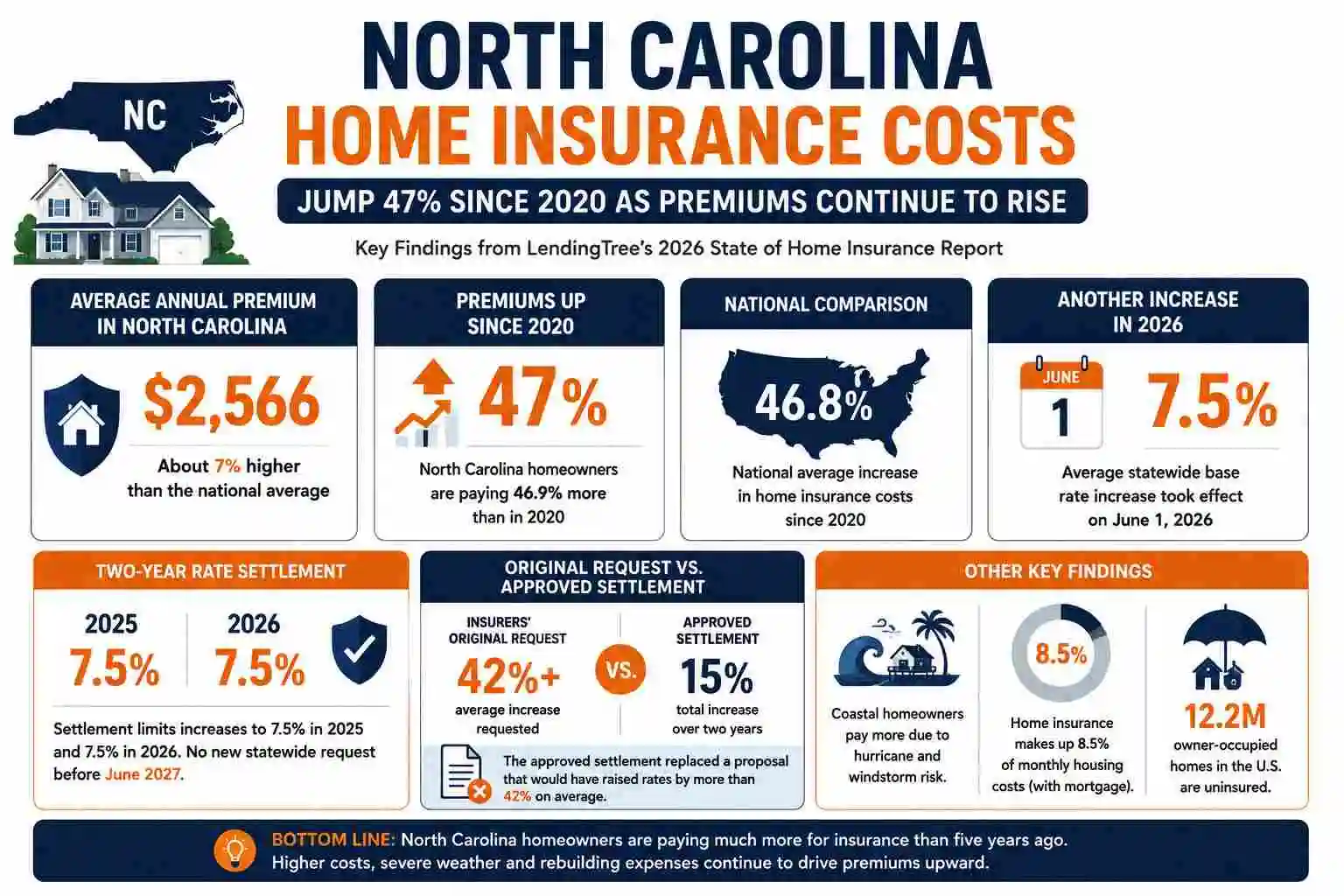
North Carolina homeowners are paying nearly 47% more for home insurance than they did five years ago, according to LendingTree’s 2026 State of Home Insurance report. The study estimates the state’s average annual premium at $2,566, about 7% higher than the national average, highlighting how insurance has become a growing expense for many homeowners.

The report comes as North Carolina enters the second year of a statewide homeowners insurance settlement that took full effect on June 1, 2026. Under the agreement, average base rates increased 7.5% this year after a similar increase in 2025, replacing an earlier proposal that sought much steeper hikes across the state.
While the approved increases were lower than insurers originally requested, premiums have continued to move higher as rebuilding costs, weather-related claims, and inflation keep driving up the cost of providing coverage.
What the New Report Shows
LendingTree’s analysis found that North Carolina’s home insurance premiums have increased 46.9% since 2020, closely matching the national trend of 46.8% over the same period.
Across the country, homeowners saw average insurance rates rise another 6% during 2025, reflecting higher claim costs and continued pressure from severe weather events.
The report also estimates that home insurance now accounts for an average of 8.5% of monthly housing costs for homeowners with a mortgage. In some high-risk states, that share approaches 20%, showing how insurance is becoming a larger part of household budgets.
Another finding points to an affordability challenge beyond North Carolina. Roughly 12.2 million owner-occupied homes in the United States remain uninsured, largely because rising premiums have made coverage harder to afford.
Why Premiums Keep Increasing
The steady rise in insurance costs isn’t linked to a single event.
Homeowners are paying more because the cost of repairing or rebuilding homes has increased significantly over the past several years. Construction materials remain expensive, skilled labor is harder to find, and larger weather-related claims have forced insurers to pay substantially more after major storms and other disasters.
Insurance companies are also facing higher reinsurance costs. Reinsurance helps insurers cover catastrophic losses, and those rising expenses are often reflected in the premiums homeowners pay when policies renew.
North Carolina’s 2026 Rate Changes
Separate from the LendingTree report, North Carolina homeowners also saw another scheduled base-rate increase take effect this year.
The North Carolina Rate Bureau had originally requested an average statewide increase of more than 42%, with some coastal areas facing proposed increases approaching 100%.
Instead, the North Carolina Department of Insurance negotiated a two-year settlement that spread the increases over 2025 and 2026, limiting the statewide average increase to 7.5% each year. Under that agreement, insurers cannot request another general homeowners insurance base-rate increase before June 2027.
Coastal Homeowners Continue to Pay the Highest Premiums
Insurance costs vary widely across North Carolina, but homeowners along the coast continue to face some of the state’s highest premiums because of greater hurricane and windstorm risk.
When the North Carolina Rate Bureau submitted its original filing, it requested much steeper increases for several coastal territories than for inland areas. Although regulators approved smaller adjustments through the settlement, many coastal homeowners still pay considerably more than the statewide average.
Another factor affecting costs is North Carolina’s consent-to-rate system. Under these agreements, policyholders can agree to pay more than the state’s approved base rate, allowing insurers to charge higher premiums in certain situations. State insurance data shows these policies account for a significant share of premiums written in higher-risk coastal regions.
North Carolina Isn’t Alone
The pressure on homeowners isn’t limited to North Carolina.
LendingTree’s report found that home insurance premiums increased by an average of 6% nationwide in 2025, while cumulative increases since 2020 reached 46.8%.
Some states experienced even larger increases. Colorado recorded the biggest jump in 2025, followed by Minnesota and Iowa. By comparison, Florida, Montana, and Texas reported some of the smallest year-over-year increases.
The findings suggest that rising insurance costs have become a nationwide issue, although the pace of increases still depends on local weather risks, rebuilding costs, and state insurance regulations.
What It Means for Homeowners
For homeowners renewing their policies this year, the report suggests higher premiums are likely to remain part of the insurance landscape.
Experts say shopping around for quotes, reviewing coverage limits, and choosing a deductible that fits your budget may help reduce costs. Homeowners should also check whether their policy includes separate hurricane or windstorm deductibles, particularly in coastal areas where those provisions are common.
While analysts expect the pace of premium increases to slow if catastrophe losses stabilize, they also note that severe hurricane seasons or other major disasters could place additional pressure on future insurance rates.
The Bottom Line
North Carolina homeowners are paying substantially more for insurance than they were five years ago, and the latest data suggests those costs remain on an upward path. Although the state’s recent settlement prevented much steeper rate increases, higher rebuilding costs, expensive weather-related claims, and inflation continue to push premiums above previous levels.
For homeowners, comparing quotes before renewal, understanding policy details, and reviewing available discounts may become increasingly important as insurance costs continue to evolve.
Source Section
- LendingTree – 2026 State of Home Insurance Report — https://www.lendingtree.com
- North Carolina Department of Insurance — https://www.ncdoi.gov
- North Carolina Rate Bureau — https://www.ncrb.org
- Insurance Information Institute (Triple-I) — https://www.iii.org
- NOAA (National Oceanic and Atmospheric Administration) — https://www.noaa.gov
Frequently Asked Questions
Why are home insurance premiums increasing in North Carolina?
Higher rebuilding costs, inflation, severe weather losses, larger insurance claims, and rising reinsurance costs have all contributed to higher premiums. North Carolina’s recent statewide base-rate increases have also affected many homeowners.
How much does home insurance cost in North Carolina in 2026?
The latest LendingTree report estimates the average annual homeowners insurance premium in North Carolina at about $2,566, although the actual cost depends on factors such as location, home value, coverage limits, and deductible.
Why do coastal homeowners usually pay more?
Homes near the coast face a greater risk of hurricane and wind damage. Because insurers expect higher potential claim costs, premiums in these areas are generally higher than those for similar homes farther inland.
Will North Carolina homeowners see another statewide rate increase soon?
Under the current settlement between the North Carolina Department of Insurance and the North Carolina Rate Bureau, another general statewide homeowners insurance base-rate request cannot be made before June 2027.
Is North Carolina more expensive than the national average?
Yes. The report estimates North Carolina’s average homeowners insurance premium is about 7% higher than the national average.


