









Kansas recorded its first Affordable Care Act (ACA) Marketplace enrollment decline in four years after enhanced federal premium tax credits expired at the end of 2025, according to new data from the Kansas Health Institute (KHI).

A total of 192,811 Kansans selected or were automatically re-enrolled in Marketplace coverage for 2026. That represents a 3.6% decline from the record 200,046 enrollees in 2025. The report also found that many consumers faced higher monthly insurance costs, prompting a noticeable shift toward lower-premium Bronze plans with higher deductibles.
The findings provide one of the clearest early pictures of how the expiration of enhanced ACA subsidies is changing health insurance affordability across the state.
Higher premiums became the biggest reason behind the enrollment slowdown
The largest change in 2026 was the increase in what many consumers pay each month for coverage.
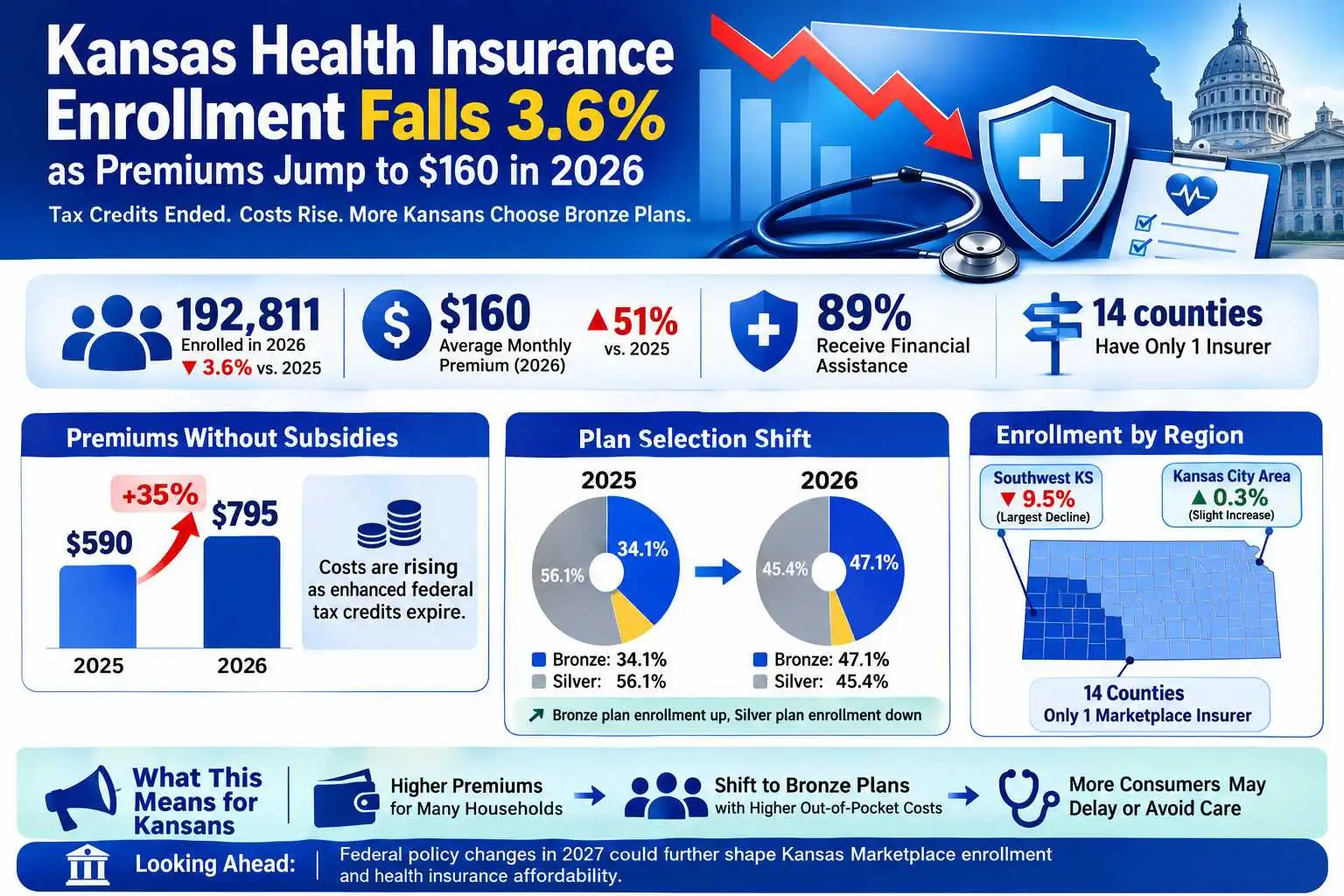
After enhanced Advance Premium Tax Credits (APTC) expired on December 31, 2025, the average monthly premium paid by Kansas Marketplace enrollees increased from $106 in 2025 to $160 in 2026.
For people who did not qualify for financial assistance, the impact was even larger. Their average monthly premium climbed from $590 to $795, making Marketplace coverage significantly more expensive.
Although nearly 89% of Marketplace consumers still received some financial assistance, the reduced subsidy levels left many households paying considerably more than they had the previous year.
Active coverage dropped even faster after enrollment ended
The decline did not stop when open enrollment closed.
While 192,811 people initially enrolled, only about 165,435 had active paid coverage in January. By February, that number had fallen further to 143,880, meaning active enrollment dropped by more than 25% from the original sign-ups.
According to KHI, this post-enrollment decline was more than double the pattern seen during the previous four years, suggesting that higher monthly costs may have made it difficult for some consumers to keep their coverage active.
More Kansans switched to Bronze plans to reduce monthly costs
The report also revealed a major change in plan selection.
Nearly 47.1% of Kansas Marketplace consumers selected Bronze or Expanded Bronze plans in 2026, compared with 34.1% a year earlier.
At the same time, enrollment in Silver plans dropped from 56.1% to 45.4%.
The shift reflects a common trade-off facing consumers. Bronze plans usually offer lower monthly premiums but require policyholders to pay much higher deductibles and out-of-pocket expenses when they receive medical care.
Because Cost-Sharing Reduction (CSR) benefits are available only with eligible Silver plans, fewer Kansans will receive help lowering deductibles, copayments, and coinsurance.
Financial assistance became less valuable for many families
Federal tax credits continue to help most Marketplace customers, but they are no longer as generous as they were under the temporary pandemic-era expansion.
In 2026:
- About 88.8% of Kansas Marketplace enrollees qualified for financial assistance.
- Only 28.5% paid $10 or less per month, down sharply from 47.4% in 2025.
- The average premium for subsidized enrollees rose to $80 per month, while overall average consumer payments reached $160.
The changes highlight how the expiration of enhanced subsidies affected both subsidized and unsubsidized consumers, although the financial impact was much greater for households receiving little or no assistance.
Some Kansas counties now have fewer insurance choices
Affordability was not the only concern.
For the first time since the Marketplace launched, 14 counties in southwest Kansas had only one health insurance company offering Marketplace coverage.
Overall, six insurers offered Marketplace plans statewide, but consumers in some rural areas had fewer opportunities to compare prices or benefits.
Limited competition can make it harder for consumers to find plans that best match their healthcare needs and budgets.
Kansas trends mirror broader national changes
Kansas is not alone.
Across the United States, Marketplace enrollment also declined after enhanced federal tax credits expired.
National enrollment fell from approximately 24.3 million consumers during the 2025 open enrollment period to about 23.1 million in 2026.
Like Kansas, many consumers nationwide shifted toward Bronze plans as higher Silver plan premiums made comprehensive coverage less affordable.
The trend suggests that affordability remains one of the strongest factors influencing Marketplace participation.
New federal Marketplace rules could shape 2027 enrollment
Additional federal policy changes are already on the horizon.
CMS finalized the 2027 Notice of Benefit and Payment Parameters, introducing several Marketplace updates, including:
- Lower federal Marketplace user fees.
- Greater flexibility for Bronze and catastrophic plans.
- Removal of standardized plan requirements.
- Stronger eligibility verification procedures.
- New rules allowing certain non-network plans in future Marketplace years.
While some changes aim to increase insurer flexibility and reduce administrative costs, eligibility and verification updates could affect future enrollment patterns beginning with the 2027 plan year.
What this means for Kansas consumers
The 2026 Marketplace results show that even relatively modest increases in monthly premiums can change how people shop for health insurance.
Many consumers chose lower-cost Bronze coverage to keep monthly bills manageable, but that decision often comes with higher deductibles and greater out-of-pocket expenses when medical care is needed.
The sharp decline in active coverage after enrollment also suggests that affordability challenges continue even after consumers initially select a plan.
As policymakers prepare for the 2027 enrollment season, premium costs, subsidy levels, insurer participation, and consumer affordability are likely to remain the biggest issues influencing Marketplace enrollment.
The Bottom Line
Kansas experienced its first Marketplace enrollment decline in four years after enhanced ACA premium tax credits expired. Higher monthly premiums, reduced financial assistance, fewer insurer choices in some counties, and a shift toward Bronze plans all point to growing affordability challenges that could continue shaping health insurance enrollment in 2027.
Source Section
- Kansas Health Institute (KHI)
https://www.khi.org/articles/early-effects-of-policy-change-on-marketplace-enrollment/ - Centers for Medicare & Medicaid Services (CMS) – Marketplace Open Enrollment & Public Use Files
https://www.cms.gov/marketplace - HealthCare.gov – Official Health Insurance Marketplace
https://www.healthcare.gov/ - CMS – 2027 Notice of Benefit and Payment Parameters Final Rule
https://www.cms.gov/cciio/resources/regulations-and-guidance - Affordable Care Act (ACA) Information
https://www.healthcare.gov/glossary/affordable-care-act/
FAQs
Why did Kansas health insurance enrollment decline in 2026?
Enrollment fell primarily after enhanced federal ACA premium tax credits expired, increasing monthly insurance costs for many Marketplace consumers.
How many people enrolled in the Kansas Marketplace for 2026?
A total of 192,811 Kansans were selected or were automatically re-enrolled in Marketplace health insurance during the 2026 open enrollment period.
How much did average premiums increase?
The average monthly premium paid by Kansas Marketplace consumers increased from $106 in 2025 to $160 in 2026. Consumers without subsidies paid an average of $795 per month.
Why did more people choose Bronze plans?
Bronze plans generally have lower monthly premiums than Silver plans, making them more affordable upfront even though they usually have higher deductibles and out-of-pocket costs.
What changed for consumers receiving ACA subsidies?
Most consumers still received financial assistance, but the expiration of enhanced premium tax credits reduced the amount of financial help available, resulting in higher monthly costs for many households.
Will Marketplace rules change again in 2027?
Yes. CMS has finalized several Marketplace rule changes for the 2027 plan year, including updates affecting plan flexibility, eligibility verification, and Marketplace administration.


