







Ratko Mladić Funeral Explained: Why Serbia’s Tribute to the Convicted War Criminal Has Sparked EU Outrage

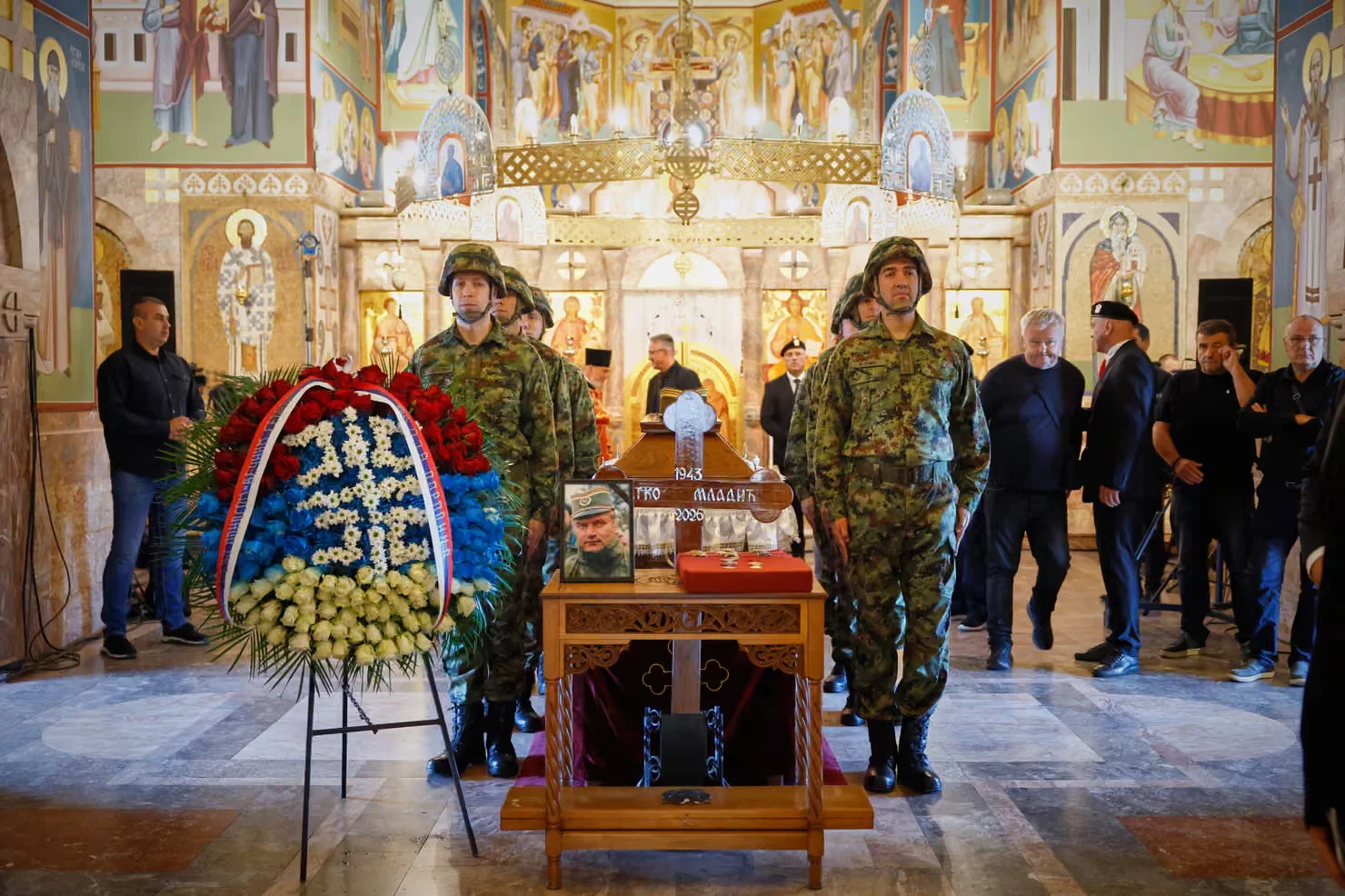
Thousands of people gathered in Belgrade on Monday for the funeral of former Bosnian Serb military commander Ratko Mladić, who died at 84 while serving a life sentence for genocide, war crimes and crimes against humanity.
Mladić was convicted by a United Nations tribunal over crimes committed during the 1992–95 Bosnian War, including his role in the Srebrenica genocide and the campaign against civilians in Sarajevo. His convictions and life sentence were upheld on appeal in 2021.
His funeral has now become more than a ceremony for a former military commander. The public tributes have triggered condemnation from the European Union and renewed questions about Serbia’s relationship with its wartime past and its stalled path toward EU membership.
Ratko Mladić Funeral 2026: Key Facts
| Fact | Details |
|---|---|
| Funeral date | September 7, 2026 |
| Location | Belgrade, Serbia |
| Age at death | 84 |
| Died | August 27, 2026 |
| Cause of death | Died while in UN detention in The Hague |
| War-time role | Commander of the Bosnian Serb Army |
| Convicted of | Genocide, crimes against humanity and war crimes |
| Sentence | Life imprisonment |
| Final conviction | Upheld by appeals chamber in 2021 |
| Major crime linked to conviction | 1995 Srebrenica genocide |
| Funeral attendance | Thousands |
| EU response | Condemned the glorification of Mladić |
Why Is Ratko Mladić Being Honored in Serbia?
The controversy comes from the sharply different ways Mladić is remembered.
For many Serbian nationalists and some Bosnian Serbs, he remains a wartime military figure who defended Serb interests during the breakup of Yugoslavia and the Bosnian War.
For survivors and victims’ families, he is remembered as a commander responsible for some of the conflict’s worst atrocities.
That divide was visible in Belgrade on Monday. Crowds gathered outside St Luke’s Church, while some supporters carried Serbian flags and images of Mladić and described him as a hero.
The ceremony included a Serbian Orthodox funeral service led by Patriarch Porfirije, while Serbian military personnel and government officials were also present.

Who Was Ratko Mladić?
Ratko Mladić was the commander of the Bosnian Serb Army during the Bosnian War from 1992 to 1995.
He became one of the most prominent military leaders of the Bosnian Serb forces during the conflict that followed the breakup of Yugoslavia.
The war left more than 100,000 people dead and displaced millions across Bosnia and Herzegovina.
Mladić was indicted by the International Criminal Tribunal for the former Yugoslavia and remained at large for years.
He was arrested in Serbia in 2011, nearly 16 years after his initial indictment, and transferred to The Hague for trial.
What Was Ratko Mladić Convicted Of?
The UN tribunal convicted Mladić in 2017 of genocide, crimes against humanity and violations of the laws or customs of war.
His convictions included persecution, extermination, murder, deportation and forcible transfer as crimes against humanity.
He was also convicted of murder, terror, unlawful attacks against civilians and hostage-taking as violations of the laws or customs of war.
The Appeals Chamber upheld those convictions and his life sentence on June 8, 2021.
The tribunal did not uphold one separate genocide finding relating to crimes against Bosnian Muslims and Bosnian Croats in certain municipalities outside the Srebrenica-related genocide count. That distinction is part of the official judgment and should not be omitted when describing his final legal record.
What Happened at Srebrenica?
The 1995 Srebrenica massacre is central to Mladić’s conviction for genocide.
More than 8,000 Bosniak Muslim men and boys were killed after Bosnian Serb forces overran the UN-declared safe area of Srebrenica.
The killings became one of the defining atrocities of the Bosnian War and are recognized by international courts as genocide.
Mladić was convicted of genocide for his role in the Srebrenica joint criminal enterprise.
What Happened During the Siege of Sarajevo?
Mladić was also convicted over crimes connected to the campaign against the civilian population of Sarajevo.
The siege lasted almost four years, with civilians subjected to shelling and sniper attacks.
The tribunal found Mladić responsible for crimes committed during the campaign, including terrorizing the civilian population.
More than 10,000 people were killed during the siege, according to widely cited historical records.
Why Do Some Serbs Still Consider Mladić a Hero?
The answer is tied to competing narratives about the Bosnian War.
Some Serbian nationalists view Mladić as a defender of Serbs during a period of violent political and territorial conflict.
That view exists despite his international conviction and life sentence.
His continued popularity has been particularly visible in parts of the Bosnian Serb political and cultural sphere, where wartime figures remain deeply connected to questions of national identity.
The funeral demonstrated that this interpretation has not disappeared three decades after the war.
Why Did the EU Condemn Mladić’s Funeral?
The European Union has strongly opposed what it considers the glorification of a convicted war criminal.
EU officials said glorifying war criminals, denying genocide or revising established findings about the conflict is incompatible with European values.
EU Enlargement Commissioner Marta Kos also canceled a planned visit to Serbia after the handling of Mladić’s return and funeral became a diplomatic issue.
The dispute matters because Serbia is an EU candidate country and its accession process has already faced significant delays.
Could the Funeral Affect Serbia’s EU Membership Bid?
The funeral does not automatically end Serbia’s EU accession process.
But it adds another point of tension between Belgrade and Brussels.
The EU expects candidate countries to address war crimes, cooperate with international justice mechanisms and support reconciliation with neighboring states.
Public glorification of Mladić directly collides with those expectations, according to European officials.
That is why the funeral has become a diplomatic issue rather than remaining only a domestic Serbian controversy.

Was Ratko Mladić Given a State Funeral?
The status of the funeral has been politically sensitive.
Before the burial, Serbian officials discussed military and state honors, while President Aleksandar Vučić sought to distance the government from responsibility for the funeral arrangements.
However, Serbian military personnel and senior officials were present, and multiple reports described the burial as taking place with state and military honors.
That distinction matters because an officially declared state funeral carries a different political meaning from a private family funeral attended by government figures.
What Happened at Mladić’s Funeral in Belgrade?
Thousands gathered around St Luke’s Church in Belgrade before the burial.
Supporters displayed Serbian flags and images of Mladić, while veterans and other mourners joined the crowds.
His coffin had previously been returned from the Netherlands aboard a Serbian government aircraft and was transported by Serbian soldiers.
The funeral service was led by Serbian Orthodox Patriarch Porfirije before Mladić was buried in Belgrade.
Why Is Mladić’s Funeral So Controversial?
The controversy is not simply about where Mladić was buried.
It is about how a person convicted of genocide and other international crimes is being publicly remembered.
Supporters portray him as a military defender and national figure.
Victims’ families and survivors see the public honors as an attempt to turn a convicted war criminal into a hero.
The EU has taken the latter concern seriously, warning that glorification and genocide denial have no place in an EU candidate country.
Why Does Ratko Mladić Still Matter 30 Years After the Bosnian War?
Mladić’s death has reopened one of the Balkans’ most difficult unresolved questions: how societies remember wars in which different communities have radically different memories of responsibility and victimhood.
The Hague tribunal created a detailed legal record of crimes committed during the conflict.
But a court judgment does not automatically settle how a society remembers the people convicted by that court.
The scenes in Belgrade show that the argument over Mladić’s legacy remains alive.
Ratko Mladić Funeral: What Happens Next?
The immediate dispute is likely to remain focused on Serbia’s relationship with the EU and the country’s approach to its wartime past.
For Brussels, the issue is tied to reconciliation, accountability and the treatment of war crimes.
For Mladić’s supporters, the funeral represents the honoring of a figure they continue to regard as a Serbian military hero.
For survivors and victims’ families, the public tribute represents something very different.
That divide is now at the center of the international reaction to Mladić’s death and funeral.


