









Israel-Lebanon Escalation: Why Did Israeli Strikes Kill 11 People in Kfar Rumman Despite the Ceasefire?

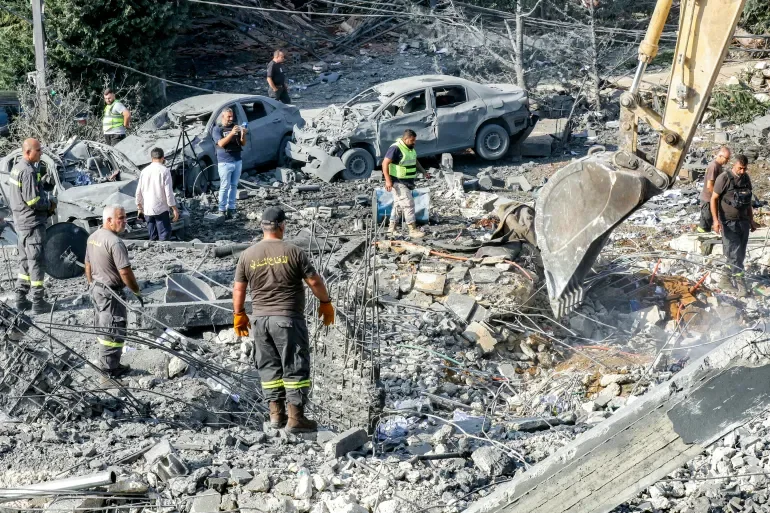
At least 11 people were killed in Israeli strikes on Kfar Rumman in southern Lebanon on Monday, September 7, including two children and two medics, according to Lebanese authorities and state media.
The attacks destroyed a three-storey residential building and hit a vehicle carrying emergency workers. The strikes came as violence between Israel and Hezbollah has intensified despite a US-brokered ceasefire framework agreed in June.
The central question is not only how many people were killed, but why the strikes happened despite the ceasefire and what they could mean for southern Lebanon.
Israel has accused Hezbollah of continuing to carry out drone attacks and attempting to rebuild its military capabilities in southern Lebanon. Hezbollah and Lebanese officials, meanwhile, have accused Israel of escalating attacks and violating the ceasefire framework.
Fast facts
| Detail | What we know |
|---|---|
| Location | Kfar Rumman, Nabatieh district, southern Lebanon |
| Date | September 7, 2026 |
| Reported deaths | At least 11 |
| Children killed | At least 2 |
| Medics killed | 2, according to Lebanese state media |
| Main strike | Three-storey residential building |
| Other strike | Vehicle carrying emergency workers |
| Injured | Multiple people, with figures varying in initial reports |
| Israel’s stated justification | Targeting Hezbollah-related military activity |
| Ceasefire | US-brokered framework agreed in June |
| Investigation/response | Lebanese authorities reported the casualties; Israeli military response was initially limited |
| Key concern | Risk of further escalation and renewed displacement |
Why did Israel strike southern Lebanon?
The Israeli military’s stated justification is connected to Hezbollah’s military activity.
Israeli officials have accused the Iran-backed group of carrying out repeated drone attacks against Israeli troops and attempting to rebuild its military capabilities in southern Lebanon.
The Israeli government has also argued that Hezbollah’s activity violates the framework intended to reduce fighting and eventually establish a more stable security arrangement in the south.
But the strikes have created another problem: the people being killed and displaced include civilians living in areas where Israel says Hezbollah operates.
That distinction is becoming increasingly important as the attacks continue.
Lebanon’s Health Ministry said the latest strikes provided evidence of serious violations of international humanitarian law, particularly because children and medical personnel were among those killed.
Those accusations have not been independently adjudicated, and the precise circumstances surrounding individual targets remain subject to further investigation.

What happened to the 11 people killed?
The dead were reported in two separate strikes.
The first and deadliest strike hit a residential building in Kfar Rumman shortly after midnight.
Lebanese authorities initially reported that nine people were killed in the attack. Reports said children were among the victims and that several others were injured.
The second strike hit a vehicle carrying emergency workers.
Lebanese authorities said two medics were killed in that attack.
The deaths have intensified concern because emergency personnel were among the victims while rescue operations were still taking place in the area.
Were the people in the building Hezbollah members?
That remains an important unanswered question.
A resident interviewed by the BBC said that some of those killed were relatives of her husband and insisted they were civilians with no connection to Hezbollah.
Israel has said it is targeting Hezbollah’s military infrastructure and activity in southern Lebanon.
However, the available reports do not establish that all of the people killed in the residential strike were Hezbollah members or combatants.
That is why it is important not to describe the victims collectively as Hezbollah fighters without evidence.
The civilian toll is also one reason the latest attacks have generated concern in Lebanon.
Why is Kfar Rumman important?
Kfar Rumman is in Nabatieh district, an area of southern Lebanon that has repeatedly been affected by fighting between Israel and Hezbollah.
The latest strikes occurred only a short distance from an area where Israeli troops maintain positions that Israel describes as part of a security zone.
That geography matters.
The June framework was supposed to create a path toward:
- Hezbollah disarming in southern Lebanon
- Israeli forces gradually withdrawing
- The Lebanese army expanding its presence
- A reduction in cross-border attacks
Instead, Israel has continued military operations in parts of southern Lebanon while accusing Hezbollah of rebuilding its military infrastructure.
This has left the ceasefire arrangement increasingly fragile.
Is the Israel-Hezbollah ceasefire breaking down?
The latest attacks are a serious sign that the ceasefire framework is under strain.
The agreement was never simply a declaration that all military activity had ended. It involved a broader process in which Hezbollah would be disarmed, Lebanese forces would deploy and Israeli forces would gradually withdraw.
That process has stalled.
Israel says Hezbollah has not fulfilled its obligations.
Lebanese officials say Israel is continuing to attack Lebanese territory and maintain positions in the south.
The result is a dangerous cycle:
Hezbollah activity → Israeli retaliation → civilian casualties and displacement → accusations of ceasefire violations → further military escalation.
The deaths in Kfar Rumman come after seven people were killed in Israeli strikes across southern Lebanon on Sunday, according to Lebanese authorities.
That means the latest incident is part of a wider escalation rather than an isolated attack.
Why are people leaving southern Lebanon again?
Residents had begun returning to parts of southern Lebanon after the June agreement raised hopes that the fighting would decline.
The renewed strikes are reversing some of that confidence.
A resident of Kfar Rumman told the BBC that her family had repeatedly considered moving to the coastal city of Sidon because of fears over nighttime attacks.
That reflects a broader problem for communities in southern Lebanon: even when fighting appears quieter during the day, residents may still fear that their homes could become targets at night.
Repeated strikes also make rebuilding difficult.
Families that have already experienced displacement face another decision — remain near their homes or leave again for safety.
How serious is the wider Lebanon conflict?
The latest deaths come after a much larger escalation that began in March.
According to Lebanon’s Health Ministry, more than 4,300 people have been killed in the conflict since March, although the figures do not distinguish consistently between civilians and combatants.
Lebanese officials have also reported extensive attacks affecting medical and emergency services.
The figures show why the latest deaths cannot be viewed only as a single-night incident.
For communities in southern Lebanon, the concern is that repeated strikes could gradually turn the ceasefire framework into another prolonged period of conflict.
What could happen next?
There are three major possibilities.
1. More Israeli strikes
If Israel believes Hezbollah is rebuilding military capabilities or launching attacks from southern Lebanon, it could continue striking suspected targets.
That would increase the risk of further civilian casualties and displacement.
2. Pressure to enforce the ceasefire
Lebanese President Joseph Aoun has called the escalation dangerous and urged the international community to pressure Israel to stop the attacks.
The United States and other international actors could therefore face increasing pressure to revive negotiations and enforce the commitments made under the June framework.
3. A wider Israel-Hezbollah escalation
The most serious possibility is that repeated exchanges develop into a broader confrontation.
That would threaten the fragile arrangement that has kept the conflict from becoming an even larger war.
For now, there is no confirmed indication that a full-scale new war has begun. But the concentration of attacks over recent days is raising fears that the existing ceasefire framework could collapse.
What is known — and what is still unclear?
Known: At least 11 people were killed in Israeli strikes in Kfar Rumman, including children and medics. A residential building was destroyed and a separate vehicle carrying emergency workers was hit.
Known: Israel says its military campaign in southern Lebanon is aimed at Hezbollah activity and has accused the group of violating the ceasefire framework.
Unclear: The exact military objective of each strike and whether all of those killed in the residential building were civilians or whether any Hezbollah-linked personnel were present.
Unclear: Whether the latest escalation will lead to a wider breakdown of the June ceasefire framework.
The biggest question now is whether the attacks remain a series of Israeli operations against suspected Hezbollah activity — or become the beginning of another much broader Israel-Hezbollah confrontation in southern Lebanon.


