









A Place to Heal Review: Cédric Kahn’s Venice Drama Finds Raw Power in a Teen Psychiatric Ward

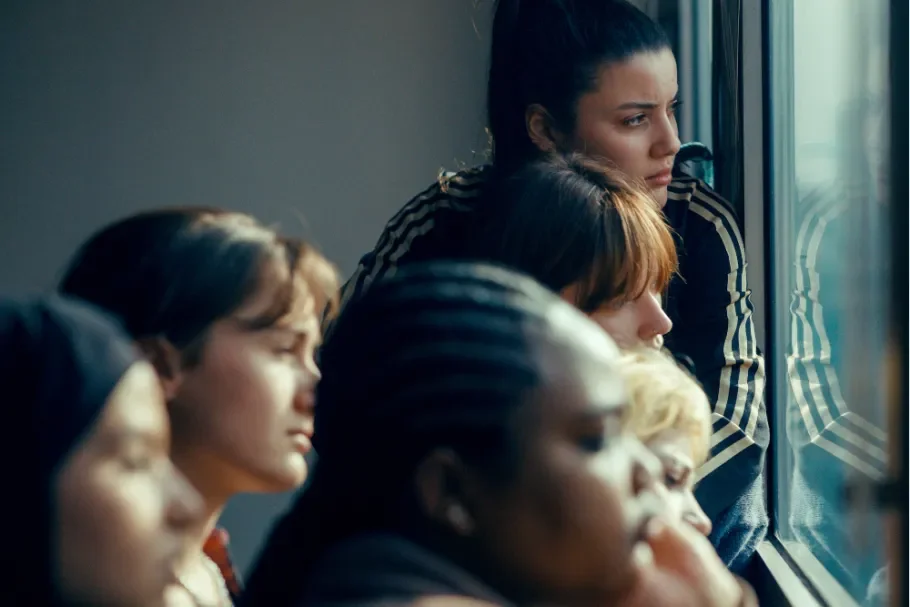
Cédric Kahn’s A Place to Heal is a quiet but emotionally intense drama that spends most of its running time inside an adolescent psychiatric ward, observing young patients and the medical staff trying to help them. Rather than turning the setting into a conventional hospital drama, Kahn focuses on small confrontations, fragile relationships and the unpredictable behavior of teenagers in crisis.
The film, known internationally as “15/18,” is competing at the Venice Film Festival. Its English-language title suggests a more comforting story than the film actually delivers. This is a difficult, sometimes uncomfortable portrait of young people dealing with mental distress, but its strongest asset is an impressive ensemble of mostly first-time young performers.
What is A Place to Heal about?
Set almost entirely inside a psychiatric unit for teenagers, A Place to Heal follows patients whose struggles and personalities collide during their time in the ward.
One of the central characters is Lucia, played by Malou Khebizi. At 17, Lucia has been admitted again following several suicide attempts. Her explanation that the attempts were connected to boys initially sounds almost casual, but the film gradually reveals the instability beneath her behavior.
Another important patient is Eloïse, played by Zoé Monpart. More physically fragile and quieter than Lucia, she has been in the institution for a longer period and appears to take her suicidal thoughts more seriously.
The film does not attempt to reduce either character to a diagnosis. Instead, Kahn observes how they interact with one another, with new arrivals and with the people responsible for their care.
Malou Khebizi leads a remarkable young cast
The performances are among the film’s biggest strengths.
Khebizi gives Lucia an unpredictable energy that keeps the character difficult to read. She can appear playful, confrontational or vulnerable within the same sequence, making her emotional state feel constantly unstable.
Monpart brings a different quality to Eloïse. Her performance is quieter and more restrained, creating a contrast with Lucia’s volatility.
The supporting cast adds further layers to the ward. Ahleme Sahraoui plays Yasmine, a shy patient who has survived domestic abuse, while Kenji Peyran appears as Enzo, a volatile new arrival whose presence changes the dynamics among the teenagers.
Most of the young actors were first-time performers, which contributes to the film’s spontaneous quality.
The adults are part of the drama too
The medical staff are not simply background figures.
Sophie Guillemin plays Carole, a nurse whose approach combines firmness with a form of tough affection. She understands that caring for the teenagers sometimes means confronting them rather than simply comforting them.
Kahn himself appears as Etienne, the head psychiatrist. His presence gives the medical side of the story a more formal and authoritative perspective.
Jennifer Decker plays Paola, a junior psychiatrist who is less rigid in her interactions with the patients.
The film also introduces Jules, a new intern played by Antoine De Foucauld. During his first patient assessment, he is physically attacked, immediately forcing him to question whether he is capable of continuing in the job.
His uncertainty provides an important perspective for the audience. The ward is not presented as a place where professionals always know what to do.
Cédric Kahn chooses observation over melodrama
Kahn’s direction is deliberately restrained.
The first part of A Place to Heal is built around a series of loosely connected incidents rather than a traditional, tightly plotted storyline. Conversations at meals, arguments between patients and private discussions with staff gradually establish the atmosphere of the institution.
One group confrontation over music eventually turns into a food fight, illustrating how quickly ordinary disagreements can escalate in the ward.
Other scenes are much more intimate, particularly the conversations between patients and supervisors. These exchanges allow the characters to reveal themselves without relying on lengthy exposition.
That observational approach gives the film a documentary-like quality.
The film grew from real-world observation
Kahn co-wrote the screenplay with Kahina Le Querrec. The script was developed after extensive first-hand observation of comparable psychiatric wards.
The characters and events are fictional, but that research helps explain why the environment feels unusually specific.
The ward can appear to be two things at once: a necessary place of protection for vulnerable teenagers and a confined environment that can feel suffocating.
That tension is central to the movie.
Enzo changes the film’s direction
The arrival of Enzo provides the film with a stronger narrative drive.
Until that point, the movie largely moves through individual moments and interactions. Enzo’s relationships with Lucia and Eloïse create new tensions and gradually push the story toward a more conventional dramatic progression.
The final section becomes considerably more focused, building toward a difficult emotional turning point for one of the characters.
This shift may divide viewers. The earlier sections feel grounded in everyday observation, while the final act moves closer to a more dramatic and emotionally heightened form of storytelling.
For some audiences, that change may feel like a departure from the film’s carefully established realism. For others, it provides the catharsis the earlier scenes deliberately avoid.
A distinctive visual style
Cinematographer Patrick Ghiringhelli gives the film an intimate visual language.
The camera frequently stays close to the characters, creating the sense that viewers are inside conversations rather than watching them from a safe distance. Multiple cameras are used in some scenes, helping preserve spontaneous reactions and overlapping interactions.
Later, the film occasionally opens into wider compositions.
The contrast is effective: close framing emphasizes the psychological pressure of the ward, while wider shots remind viewers of the physical space surrounding the characters.
A Place to Heal at the Venice Film Festival
A Place to Heal is competing at the Venice Film Festival, marking Kahn’s return to a major European competition after his previous competition appearance in 2018.
The film follows Kahn’s recent work, including The Goldman Case and Making Of, while continuing his interest in stories built around human behavior and emotionally complicated characters.
Outside France, the film appears more likely to find an audience through specialist theatrical distribution and the arthouse streaming market than through a broad commercial release.
A Place to Heal review: Our verdict
A Place to Heal works best when it simply watches its characters.
Its strongest passages come from the everyday life of the psychiatric ward: arguments, awkward conversations, sudden outbursts and moments when a teenager unexpectedly drops their defenses.
The young ensemble gives the film much of its energy, while Kahn’s restrained direction avoids turning mental illness into easy melodrama.
The final act takes a more dramatic and romanticized route than the film’s observational opening, and that tonal shift will not work equally well for every viewer. Even so, the performances and sense of lived-in reality make the film stand out.
Verdict: A thoughtful, uncomfortable and emotionally powerful psychiatric-ward drama, carried by an exceptional young ensemble and Cédric Kahn’s close observational direction.


