









Hawaii Family Health Insurance Costs Rise 50% Over 10 Years, Highest Increase in the U.S.
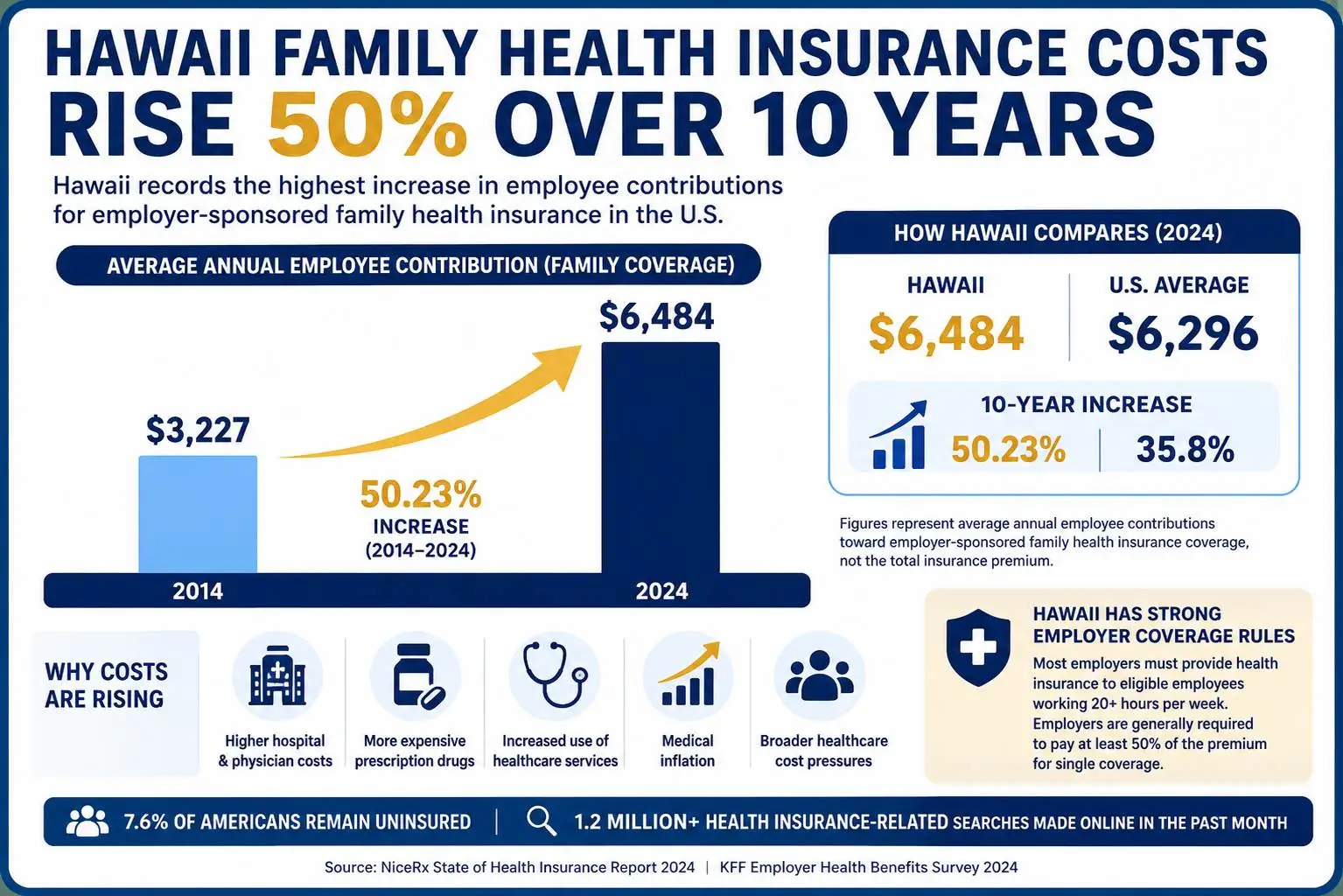
A new NiceRx analysis found that Hawaii experienced the nation’s largest increase in employee contributions for employer-sponsored family health insurance between 2014 and 2024. The average annual employee contribution rose from $3,227 to $6,484, an increase of 50.23%, compared with a 35.8% national average increase over the same period.

HONOLULU — Hawaii has recorded the largest increase in employee contributions toward employer-sponsored family health insurance in the United States over the past decade, according to a new analysis by NiceRx.
The findings highlight the growing financial pressure many working families face as healthcare costs continue to rise across the country, even in states with long-standing employer health coverage requirements.
What the Report Measured
The analysis examined employer-sponsored family health insurance data across all 50 U.S. states to identify where workers have experienced the greatest financial pressure over the past decade.
Researchers evaluated several indicators, including employee contributions for family coverage, uninsured rates, long-term premium trends, and health insurance search activity. The goal was to compare how health insurance affordability has changed across different states rather than measure changes to a single insurance plan or employer.
Hawaii Outpaced Every Other State
The analysis reviewed employer-sponsored health insurance data across all 50 states, comparing employee contributions, uninsured rates, long-term premium trends, and insurance search activity.
While costs increased nationwide, Hawaii experienced the steepest rise in employee contributions for family coverage, placing it ahead of every other state included in the study.
How Hawaii Compares With the National Average
The findings align with the 2024 KFF Employer Health Benefits Survey, which reported that the average annual employer-sponsored family health insurance premium reached $25,572 nationwide.
Workers paid an average of $6,296 toward that total, while employers covered the remaining share. In Hawaii, the average employee contribution reached $6,484, slightly above the national average.

Why Costs Continue to Rise
Although the NiceRx analysis focused on long-term trends rather than individual causes, health policy experts generally point to rising hospital costs, more expensive prescription drugs, increased healthcare use, and medical inflation as major factors driving employer-sponsored insurance costs higher.
These pressures affect both employers and employees, often resulting in higher payroll deductions for family health coverage.
Hawaii Still Has Strong Employer Coverage Rules
Despite rising costs, Hawaii continues to operate under its long-standing Prepaid Health Care Act, which requires most employers to provide health insurance to eligible employees working at least 20 hours per week.
The law also limits how much eligible workers contribute toward their own coverage, making Hawaii one of the few states with employer health coverage requirements that go beyond federal standards.
Affordability Remains a Concern
The report found that 7.6% of Americans remain uninsured, while more than 1.2 million health insurance-related searches were made online in a single month, reflecting continued concern about coverage and affordability.
NiceRx President Rob Stransky said rising premiums and persistent coverage gaps are forcing many Americans to make increasingly difficult decisions about healthcare, particularly those managing long-term medical conditions.
Officials Encourage Consumers to Seek Help
Hawaii Insurance Commissioner Scott Saiki said health insurance complaints remain a priority because residents depend on their coverage to access medical care.
He encouraged consumers who believe they were wrongly denied health insurance coverage or claims to contact the state’s Insurance Division, where staff investigate complaints and assist policyholders.
You may also find these related health insurance stories helpful:
- Trump Ends Medicare Part D Subsidy: What It Means for 2027 Medicare Drug Costs
- Humana to Exit Medicare Advantage Plans in 2027
- Healthcare Costs Push Consumer Confidence Down as Medical Bills Rise
What It Means for Families
The findings do not indicate that employee contributions suddenly increased by 50% in 2026. Instead, they reflect how costs changed between 2014 and 2024 based on the latest available data.
For many working families, the report highlights a broader trend: health insurance continues to consume a larger share of household budgets even in states with strong employer coverage protections. As healthcare expenses rise, reviewing plan options during annual enrollment and understanding deductibles, provider networks, and prescription drug coverage can help families make more informed decisions.
The Bottom Line
Hawaii recorded the largest increase in employee contributions for employer-sponsored family health insurance in the United States over the past decade, according to a new NiceRx analysis. While employer-sponsored coverage remains a key source of financial protection, the report underscores the growing affordability challenges facing workers as healthcare costs continue to climb nationwide. The findings reflect historical changes between 2014 and 2024, not a new premium increase that occurred in 2026.
Sources & References
- NiceRx – Health Insurance in America: The States Facing the Highest Coverage Gaps and Rising Costs
- https://www.nicerx.com/KFF (Kaiser Family Foundation) – Employer Health Benefits Survey & State Health Facts
- https://www.kff.org/U.S. Census Bureau – Health Insurance Coverage Data and QuickFacts
- https://www.census.gov/Hawaii Insurance Division (Department of Commerce and Consumer Affairs) – Official information on health insurance and consumer assistance
- https://cca.hawaii.gov/ins/
FAQs
Why are health insurance costs rising faster in Hawaii?
Healthcare costs have increased because of higher hospital expenses, prescription drug spending, medical inflation, and greater use of healthcare services. These factors have contributed to faster premium growth over the past decade.
How much did family health insurance costs increase in Hawaii?
Employee contributions for employer-sponsored family health insurance increased from $3,227 in 2014 to $6,484 in 2024, representing a 50.23% increase.
Is Hawaii’s increase higher than the U.S. average?
Yes. Hawaii recorded the highest increase among all states. The national average increase over the same period was 35.8%.
Does Hawaii require employers to provide health insurance?
Yes. Under Hawaii’s Prepaid Health Care Act, most employers must provide health insurance to eligible employees who meet the state’s coverage requirements.
What does this mean for Hawaii families?
Higher employee contributions mean many working families are paying more for employer-sponsored health insurance, making it increasingly important to compare plan options and understand deductibles, provider networks, and prescription drug benefits.
Can employees reduce their health insurance costs?
Depending on their employer’s available plans, employees may be able to lower costs by comparing coverage options during open enrollment, using in-network providers, choosing generic medications when appropriate, and taking advantage of preventive care benefits.


