









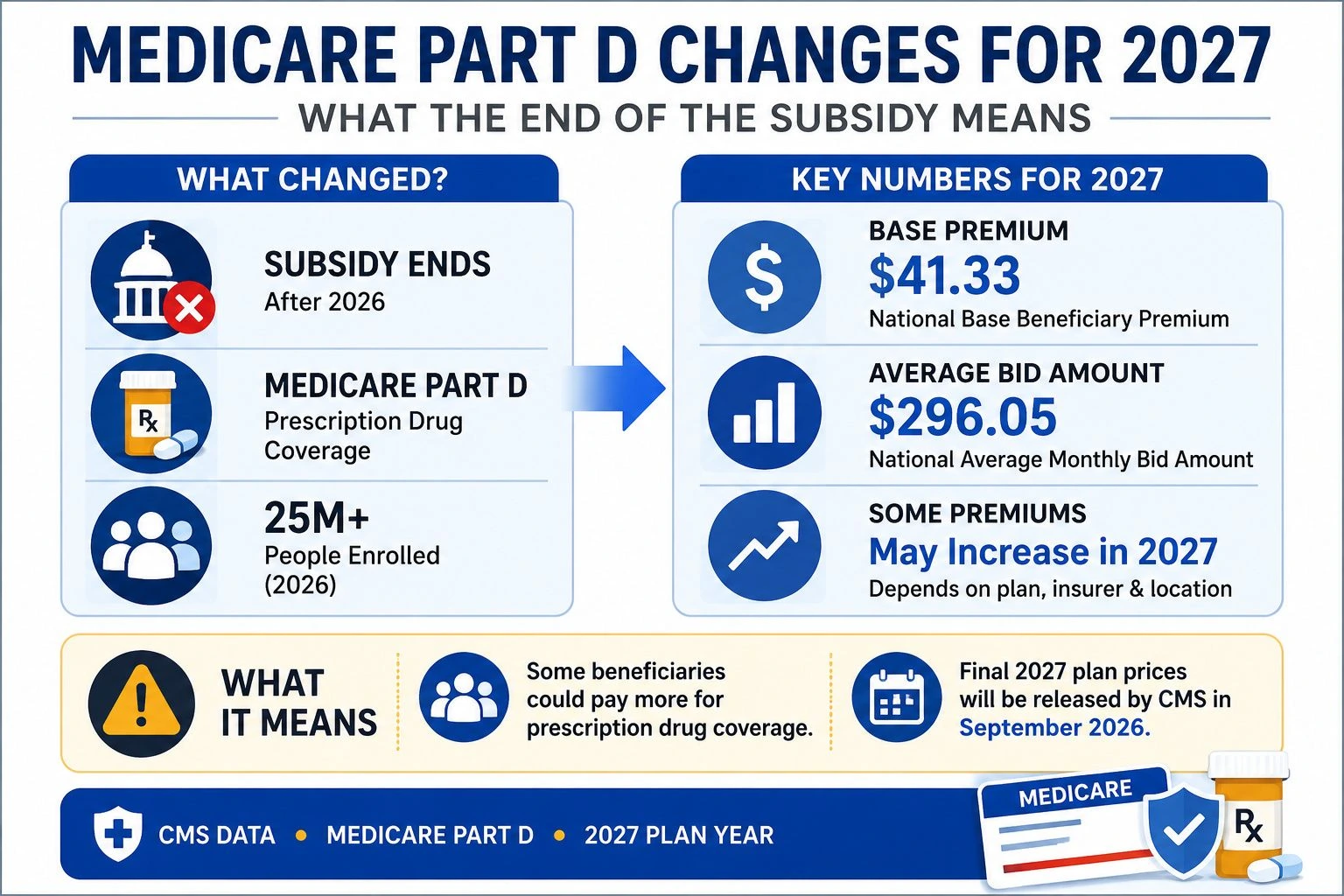
If you have a Medicare Part D prescription drug plan, the temporary federal subsidy that helped keep premiums stable will end after 2026. CMS says most beneficiaries are expected to see premium increases of less than $10 per month, while some plans may experience larger or smaller changes depending on their bids and market conditions. Final 2027 premiums and plan details will be released before Medicare Open Enrollment later this year. The agency has also announced a 2027 National Average Monthly Bid Amount of $296.05 and a National Base Beneficiary Premium of $41.33.

Millions of Medicare beneficiaries could see changes to their prescription drug plan costs next year after the Trump administration confirmed it will end the temporary Medicare Part D Premium Stabilization Demonstration at the close of 2026. The program was introduced to cushion premium increases while major changes to Medicare Part D were being implemented, but federal officials now say insurers have enough experience to price their plans without additional government support.
The decision does not mean every Medicare beneficiary will pay dramatically higher premiums. However, it does mark a significant policy shift that could increase costs for some standalone Medicare Part D plans beginning in 2027, depending on where beneficiaries live and which insurer they choose. According to the Centers for Medicare & Medicaid Services (CMS), the program will return to normal market conditions for the 2027 plan year.
Why This Matters
For millions of older Americans, Medicare Part D is essential because it helps cover the cost of prescription medications. Even relatively small monthly premium increases can add up over an entire year, especially for retirees living on fixed incomes.
The administration says ending the subsidy reflects a more stable insurance market rather than a reduction in Medicare benefits. Consumer advocates, however, note that beneficiaries should carefully compare available plans during the 2027 Open Enrollment period because premiums, formularies, and out-of-pocket costs may vary more than they have in recent years.
What Is the Medicare Part D Subsidy?
The Medicare Part D premium stabilization subsidy is a temporary federal financial support program designed to help keep prescription drug plan premiums more stable for beneficiaries. It does not replace Medicare Part D coverage or pay all prescription costs. Instead, it helps reduce sharp premium increases for participating plans. With the temporary subsidy ending after 2026, some Medicare Part D plans may see higher monthly premiums in 2027, although CMS expects most beneficiaries to experience increases of less than $10 per month.
Why Is the Trump Administration Ending the Medicare Part D Subsidy?
The temporary subsidy was never intended to be a permanent part of Medicare. It was introduced in 2025 to help stabilize standalone Medicare Part D premiums after major benefit changes under the Inflation Reduction Act (IRA) created uncertainty for insurers pricing prescription drug plans.
After reviewing insurers’ 2027 plan bids, the Centers for Medicare & Medicaid Services (CMS) concluded that Medicare Part D insurers now have enough experience with the redesigned benefit to price their plans without additional federal financial support. As a result, the Part D Premium Stabilization Demonstration will officially end after the 2026 plan year, returning the program to its normal market-based structure in 2027.
Instead of extending billions of dollars in temporary assistance, CMS says insurers should now be able to compete and price plans using actual claims experience rather than government stabilization payments. In other words, the administration believes the market has matured enough that the extra subsidy is no longer necessary.
What Exactly Is Changing in 2027?
The biggest change is that insurers will no longer receive payments through the temporary Premium Stabilization Demonstration. That means Part D plans will calculate premiums under the regular Medicare payment system rather than relying on additional federal support.
At the same time, CMS released several important preliminary figures for the 2027 Medicare Part D program.
| 2027 Medicare Part D Update | Official Figure |
|---|---|
| National Average Monthly Bid Amount | $296.05 |
| National Base Beneficiary Premium | $41.33 |
| Premium Stabilization Demonstration | Ends after 2026 |
| Premium Increase Cap under the IRA | Maximum 6% annually through 2029 |
These figures are preliminary and help insurers finalize their Medicare Advantage and Part D offerings before Open Enrollment later this year. CMS will publish the final premiums, plan details, and coverage landscape in September.
Will Everyone Pay Higher Medicare Part D Premiums?
Not necessarily.
One of the biggest misconceptions is that ending the subsidy automatically means every Medicare beneficiary will receive a much higher bill. The official announcement does not say that every enrollee will face a large premium increase.
According to CMS, premiums will continue to vary by insurer, location, and plan design. The agency also notes that the National Base Beneficiary Premium for 2027 will be $41.33, while annual increases remain subject to the Inflation Reduction Act’s premium stabilization provisions that limit annual increases to no more than 6% through 2029. Final plan-specific premiums will be confirmed when insurers release their approved 2027 offerings.
You may also find these related health insurance stories helpful:
- Humana to Exit Medicare Advantage Plans in 2027
- New Jersey, New York and 20 States Sue to Block Trump’s ACA Rule
- Hawaii Family Health Insurance Costs Rise 50% Over 10 Years
- Healthcare Costs Push Consumer Confidence Down as Medical Bills Rise
Why This Decision Matters Beyond Premiums
The announcement signals more than the end of a temporary subsidy. It also reflects the administration’s view that the redesigned Medicare Part D program has moved beyond its transition period.
For beneficiaries, however, the practical question is not whether the demonstration is ending—it is how their own plan will change. Since every insurer files separate bids, two people living in different states—or even enrolled in different plans within the same county—could see very different premium changes in 2027.

That is why Medicare beneficiaries should review their options during the upcoming Open Enrollment period rather than automatically renewing their current prescription drug plan. The final CMS plan landscape released in September will provide the most accurate picture of 2027 costs and available coverage.
Who Could Be Affected the Most?
The end of the temporary subsidy is expected to affect people enrolled in standalone Medicare Part D prescription drug plans, although the impact will not be the same for everyone.
Your 2027 premium will depend on several factors, including your insurance company, the specific Part D plan you choose, where you live, and how that insurer priced its 2027 bid. Two people with similar prescriptions could still pay different premiums if they enroll in different plans.
According to CMS, the final 2027 Medicare Advantage and Part D plan details—including premiums, formularies, and plan availability—will be released in September before Medicare Open Enrollment begins.
What Should Medicare Beneficiaries Do Before Open Enrollment?
Although no immediate action is required, beneficiaries should avoid automatically renewing their current drug plan.
Instead, review your Annual Notice of Change (ANOC) when it arrives and compare available Part D plans during Open Enrollment. A plan that was the best value in 2026 may not remain the most affordable option in 2027.
Even if your monthly premium changes only slightly, differences in deductibles, pharmacy networks, and covered medications can have a much bigger effect on your total annual prescription costs.
What About Medicare Advantage Plans?
This announcement specifically concerns the Part D Premium Stabilization Demonstration, which primarily supported standalone Medicare Part D prescription drug plans.
Many Medicare Advantage plans include prescription drug coverage, but their final 2027 premiums and benefits will be announced separately when CMS releases the complete Medicare Advantage and Part D landscape later this year. Beneficiaries enrolled in Medicare Advantage should also review their plan documents during Open Enrollment because premiums, provider networks, and drug coverage can change from year to year.
What Insurers Are Saying
Some of the country’s largest Medicare Part D insurers—including UnitedHealth Group, Humana, and CVS Health’s Aetna—will submit their final 2027 offerings under the updated market rules.
The administration argues that insurers now have enough pricing experience to operate without temporary federal stabilization payments. Industry analysts, however, expect competition to remain strong, with insurers adjusting premiums, deductibles, and formularies to attract and retain Medicare beneficiaries during Open Enrollment.
Rather than assuming every plan will become more expensive, experts recommend comparing multiple options because pricing strategies will vary from one insurer to another.
Why This Story Matters
This is more than a routine Medicare update. It marks the end of a temporary federal program that helped stabilize prescription drug plan premiums during a period of major policy changes.
For millions of Americans who rely on Medicare Part D for prescription coverage, the key takeaway is simple: don’t assume your current plan will remain your best option in 2027. Reviewing plan changes before Open Enrollment could help you avoid paying more than necessary for the same prescription drug coverage.
The Bottom Line
The Trump administration’s decision to end the Medicare Part D Premium Stabilization Demonstration marks an important change for the 2027 plan year—but it does not mean every beneficiary will automatically face a major premium increase.
Instead, the temporary subsidy that helped keep prescription drug plan premiums stable will expire after 2026 as CMS returns the program to normal market pricing. While some Medicare beneficiaries could pay more depending on their insurer and plan, others may see only modest changes—or even lower premiums if they switch plans during open enrollment.
The most important step is to review your 2027 Medicare Part D options before renewing your current coverage. Comparing premiums, deductibles, formularies, and pharmacy networks could save money while ensuring your medications remain covered.
Sources
Frequently Asked Questions
1. Why is the Trump administration ending the Medicare Part D subsidy?
According to CMS, the temporary Premium Stabilization Demonstration was created to help insurers adjust to major Medicare Part D benefit changes. After reviewing 2027 plan bids, CMS concluded that insurers now have enough experience to price their plans without additional government support, so the demonstration will end after 2026.
2. Will Medicare Part D premiums increase in 2027?
They may increase for some beneficiaries, but not everyone. Premiums will continue to vary by insurer, plan, and location. CMS has indicated that most beneficiaries are expected to see relatively modest changes, while final plan-specific premiums will be announced before open enrollment.
3. What is the Medicare Part D base beneficiary premium for 2027?
CMS has announced a National Base Beneficiary Premium of $41.33 for 2027. This is the national benchmark used to calculate plan premiums, but your actual monthly premium may be higher or lower depending on the plan you choose.
4. What is the National Average Monthly Bid Amount for 2027?
The preliminary National Average Monthly Bid Amount (NAMBA) for Medicare Part D in 2027 is $296.05. CMS uses this amount when calculating government subsidies for Medicare Part D plans.
5. Does this change affect Medicare Advantage plans?
The announcement specifically ends the temporary subsidy supporting Medicare Part D pricing. However, CMS will release the final 2027 Medicare Advantage and Part D plan details together before Open Enrollment, so Medicare Advantage enrollees should also review any changes to their coverage.
6. Should I switch my Medicare Part D plan in 2027?
Not automatically—but you should compare plans before renewing. Premiums, deductibles, covered drugs, and pharmacy networks can change every year. Shopping around during Open Enrollment may help reduce your overall prescription drug costs.
7. When will the final 2027 Medicare Part D premiums be announced?
CMS has said the final Medicare Advantage and Medicare Part D premiums, plan details, and coverage landscape will be released in September 2026, ahead of the annual Medicare Open Enrollment period.


